Month: September 2020
-

Shrimp
Although you might think that the word shrimp originally referred to the small, tasty shellfish and that it was only later used as a contemptuous epithet for diminutive people, probably the reverse is true: when shrimp appeared in English in the fourteenth century, it referred to small creatures and items of all sorts, including people,…
-
Shoulder
Because a shoulder of beef or mutton is less esteemed than other parts of the carcass, that cut of meat was once reserved for house guests whose presence had become tiresome. If the guests did not get the hint and leave, the same shoulder—this time served cold—would be presented to them the next day at…
-

Shitake
Shitake, turducken, and crapulence are all food terms whose first syllable coincidentally corresponds to a word meaning excrement. With shitake the accidental resemblance is less apparent in its other form, shiitake, which better represents the origin of the word: it derives from the Japanese phrase shii take, meaning oak mushroom, so called because the golden-capped…
-
Sherry
The fortified Spanish wine known as sherry has nothing to with the personal name Sherry. Whereas Sherry, the woman’s name, originated as a pet form of Charlotte (which in turn is a feminine form of Charles, a Germanic name meaningfree man), the alcoholic sherry derives ultimately from the name Caesar. Two thousand years ago, Julius…
-

Sherbet
Until ice cream was invented in the eighteenth century, the only frozen confection available in Europe was sherbet, also known as sorbet. These mixtures of fruit syrup and granular ice were introduced to the rest of Europe by the Italians, who had been taught how to make them by the Turks, who had learned from…
-
Shaddock
Resembling an orange, but much bigger in size, the shaddock is the ancestor of the grapefruit, which was developed from the shaddock in the early nineteenth century in the West Indies. Before settling on its current name, the shaddock was known by several others: the first was the rather whimsical Adam’s apple, first used in…
-
Sewer
During the Middle Ages, guests were brought to the dinner table by the sewer, and they would have been offended had they not been accorded that honour. The sewer was not, however, a stinking, underground channel of slow-moving sludge, but rather was a man, as fragrant as a man could be back then, whose job…
-
Sesame
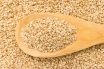
Before 1785, English authors spelt the word sesame in a variety of ways, ranging from sysane, to sesama, to sesamo, to sesamy; after 1785, every English author spelt the word as we do, sesame. The almost instantaneous agreement on the spelling of the word was caused by the publication, in that year, of a translation…
-
Serviette
Like dessert and servant, the word serviette ultimately derives from the Latin servus, meaning slave. When English borrowed serviette from French in the late fifteenth century, the word denoted a small cloth placed before each dinner guest, a meaning serviette may have acquired because its function—to mop up spills or wipe off fingers—was once performed…
-
Sea-pie
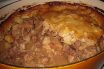
Made by alternating layers of meat, fish, and vegetables with layers of broken biscuits, the dish known as sea-pie does not really have anything to do with the sea or with pie. Rather, the name originated in the mid eighteenth century when the English heard, and then attempted to spell, the French word dpaille, a…