Month: September 2020
-

Satay
A satay is a Malaysian dish made by grilling pieces of meat on a skewer, and then serving them with a spicy sauce. According to the travel writer who introduced the word to English in 1934, the source of the dish’s name is the Chinese word satae, denoting three pieces of meat. Embark on a…
-
Saskatoon
The Western Canadian berry known as the saskatoon derives its name from the Cree misaskwatomin. In turn, this Cree name is made up of misaskwat, the name of the bush that produces the berry, and min, meaning berry. Further back, misaskwat derives from misa skwat, meaning that which is solid wood, so called because the…
-

Sarsaparilla
Sarsaparilla, a carbonated beverage and acclaimed medicinal tonic, takes its name from the plant from which it is made. In turn, the sarsaparilla plant likely derives its name from two Spanish words: zarza, meaning bramble, and parilia, which is the diminutive form of the Spanish parra, meaning vine. Further back, the Spanish word zarza derived…
-
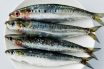
Sardine
Although sardines were eaten fresh for thousands of years, this changed in the 1820s when the French began to can them in oil. In England, so popular did these canned sardines become that the expression to be packed in like sardines emerged in the first decade of the twentieth century as a metaphor for a…
-
Sapid
In Latin, the verb sapere means both to taste and to know, the notion being that metaphorically “tasting” something allows you to gain knowledge about it. Similarly, in English, the word taste itself also has this double sense: usually it refers to the flavour of food, but having good taste can also mean knowing what…
-

Sangria
The French term sang-froid literally means cold-blooded, but these two idioms have different connotations: murderers and snakes are cold-blooded, but pool hustlers display sang-froid. Different yet again is someone of a sanguine temperament—someone who “takes heart” when faced with a challenge, someone who is optimistic and even amorous. All these sang words derive from the…
-

Sandwich
The usual story behind the naming of the sandwich dates back to 1762 when John Montagu, the fourth earl of Sandwich, refused to leave his gambling table to eat, despite having been playing cards for over twenty-four hours. Instead, Montagu asked that a piece of beef between two slices of bread be brought to him…
-
Samovar
Traditionally given as a wedding gift in Russia, the two-handled tea kettle known as the samovar has a name that literally means self-boiler, deriving as it does from the Russian same, meaning self, and varit, meaning to boil The word first appeared in English in 1830. A metal tea-urn typically designed with an internal tube…
-
Salver
A salver is a tray for serving refreshments; sage is an herb used to season food; a safe is a storage-place for valuables; and a salve is an ointment for healing burns. These items seem to have little in common, but their names derive from the same source, the Latin salvus, meaning uninjured or healthy.…
-
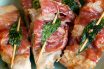
Saltimbocca
Saltimbocca, an Italian dish that is a specialty of Rome, is made by browning slices of veal and ham and then cooking them in an anchovy sauce. Despite its spelling, saltimbocca does not derive its name from being especially salty. Rather, it comes from three Italian words—saltare, in, and bocca—which, strung together, literally mean to…