Month: September 2020
-
Postpast
Just as English now uses the word antipasto to refer to an hors d’oeuvre served before an Italian meal, it once used the word postpast to refer to a little snack following a meal. Postpast, which derives from the Latin post, meaning after, and pastus, meaning food, was current in English only during the seventeenth…
-
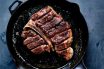
Porterhouse steak
In the late fourteenth century, labourers who specialized in carrying heavy things from place to place came to be known as porters, a word that derives from the Latin portare, meaning to carry. Porters, not surprisingly, tended to be large men with small wages who could only afford to quench their thirst with a cheap…
-
Portable soup
Portable soup sounds like a joke, rather like instant water or stew on a stick. After all, what soup isn’t portable? However, in the mid eighteenth century, the term portable soup arose to denote a foodstuff made by boiling meat until all that was left was a thick, syrupy resin that could be dried and…
-
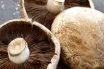
Portobello
No one is quite sure how to spell the name of this mushroom. Merriam-Webster has it under portobello, but then gives portabella and portabello as variant spellings. If we Google the word to get a snapshot of how real people are spelling it, the picture is just as murky: on the Internet, the phrase portobello…
-
Port
Usually drunk at the end of a meal, the strong, sweet wine known as port takes its name from Oporto, a coastal city in Portugal through which it is exported. In Portuguese, Oporto literally means the port, and was bestowed upon the city because of its important harbour, one never made inaccessible by ice (the…
-
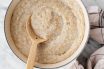
Porridge
Bland and formless, as devoid of life as a crumpled sock, porridge had nothing to take its name from except the pot in which it was made. The original name of the substance was therefore pottage, first recorded in English in the early thirteenth century; by the early sixteenth century, the pronunciation, and therefore the…
-
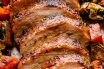
Pork
After the French came from Normandy in 1066 and conquered England, they decided that they would be the ones who ate the animals, while the defeated English would be the ones who raised the animals. Accordingly, most of the original English animal names—such as pig, cow, calf, sheep, and deer—continued to be used in the…
-
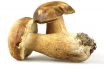
Porcini
The mushroom known as porcini is a swinish word: in Italian, porcini means piglets, a name that has been variously explained. Some say it alludes to the fat little stems of the fungus; others say that pigs were used to locate it in the wild; and still others say that slices of moist porcini, when…
-

Poppy seed
The red petals of the poppy were once used as a food colouring, but it is the seeds of the plant that are now used in cooking, especially sprinkled on bagels or mixed in with pastry fillings. The poppy takes its name from the Latin name for the plant, papaver, which English borrowed as popei…
-
Poor boy
The year 1952 is a momentous one in sandwich history. It was in that year the name poor boy was first bestowed upon a food product created by inserting meat and mixed pickles between two slices of bread. The result, a substantial sandwich that even “poor boys” could afford, caught on like hot cakes and…