Month: September 2020
-
Madeira
Although Madeira is a white wine, it has an amber tint because it is heated in its cask before being bottled. The wine takes its name from the Portuguese island where it is produced, and the island in turn was named Madeira—the Portuguese word for timber—because it was covered with thick forests. Ultimately, the Portuguese…
-
Made dish
A made dish is one composed of several ingredients, as opposed to just one. Thus, a bowl of steamed peas is not a made dish, but cannelloni stuffed with cheese and served with sauce is. The term was first used at the beginning of the seventeenth century; although most chefs respect the skill required to…
-
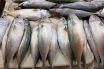
Mackerel
In the fourteenth century, and for many centuries after, the word mackerel meant two things: it referred to a North Atlantic fish, an important food source for the northern European nations; and it referred to someone who was a pimp or, as he would be called back then, a pander. One explanation that accounts for…
-
Lunch
From the mid fourteenth to the late sixteenth century, the repast we now call lunch was known not as luncheon but as nuncheon. The word nuncheon developed from noon schenche, the word schenche having derived from an Old English word meaning drink. A noon schenche, therefore, was literally a drink taken at noon, though naturally…
-
Lukewarm
Water can exist at many different temperatures, but only three of those temperatures have specific names: freezing, boiling, and lukewarm. Further, while freezing and boiling are determined by the molecular structure of the water itself (becoming a solid at 0° Celsius and a vapour at 100° Celsius), lukewarm is uniquely determined by the body temperature…
-

Loquat
The pear-shaped fruit known as the loquat takes its name from the Cantonese luh kwat, meaning rush orange, so named because it grows best in marshy soil among rushes. One of the Cantonese words represented in loquat also appears in kumquat, a small citron fruit whose name means gold orange. Kumquat appeared in English at…
-
Long pig
The culinary term long pig arose as an English translation of a Maori name for human flesh prepared for the dinner table. It is unclear whether the Maoris thought humans resembled pigs because of their delicious flavour or because of their beastly behaviour. The eighteenth-century satirist Jonathan Swift, however, asserted in A Modest Proposal that…
-
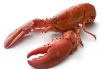
Lobster
Until the eighteenth century when Swedish scientist Carolus Linnaeus established the modern system of classifying animals, philosophers and scientists used a zoological system devised in the fourth century B.C. by Aristotle, who began by dividing animals into those with red blood and those with not-red blood. This rough and ready approach to classification explains why…
-
Loblolly
In the sixteenth century, life on board a ship beetling across the Atlantic Ocean was rather dreary: extracurricular activities were limited to rum, sodomy, and the lash, and illness was prevalent due to poor food, close quarters, and tossing waves. Sick sailors were often fed loblolly, a thick gruel whose peculiar name might seem reminiscent…
-

Loaf
The most amazing fact about the history of the word loaf is not where it came from, but where it went: it became part of two Old English compounds that eventually evolved into the words lord and lady. The word loaf was first recorded in the tenth century, when it was spelt and pronounced hlaf.…