Month: September 2020
-

Hot cross buns
Hot cross buns acquired their name from being indented with a cross commemorating Good Friday, the only day they were eaten; originally known simply as cross buns, they became hot cross buns in the early eighteenth century because of a rhyme shouted by street vendors: “One a penny, two a penny, hot cross buns, butter…
-
Hollow meat
Unlike large animals such as cows or deer, small animals such as chickens, rabbits, and ducks can be cooked whole, meaning that before they go into the oven they have a “hollow” where their innards once were that can be filled with stuffing or forcemeat. These small, “hollow” animals were not originally sold by butchers,…
-
Hollandaise sauce
The egg-and-butter sauce known as hollandaise takes its name from the country where it originated. In turn, the name Holland probably derives from a Dutch source meaning hollow land, so called because the topography of the country is flat and low, some areas even lying below sea-level. Similarly, Holland’s other name—The Netherlands—means lower land, the…
-
Hogwash
Nowadays, the most familiar sense of hogwash is the figurative one: an implausible explanation is hogwash, synonymous with hooey, humbug, baloney, fiddie faddle, blarney, codswallop, horsefeathers, bullshit, and poppycock. In the fifteenth century, however, hogwash referred to the slop or swill produced by a kitchen. The water used to boil the turnip, the carrot scrapings,…
-
Hogshead
A hogshead is a liquid measure that varies in capacity depending on what is being measured. Thus, a hogshead of wine is 63 gallons, of beer 54 gallons, of ale 48 gallons, of molasses 100 gallons, of claret 46 gallons, of port 57 gallons, of sherry 54 gallons, and of Madeira 46 gallons. These varying…
-
Hogo
In the mid seventeenth century, the English borrowed the French phrase haulgout—literally meaning high taste—and applied it both to foods with a pleasantly piquant flavour and to foods that stink to high heaven. Sometimes the English spelt the term as hogo, representing how they actually pronounced the French term, but the new spelling never completely…
-
Hodgepodge
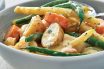
Although we now use them metaphorically to refer to a confused mess of anything, the words hodgepodge, gallimaufry, and farrago all originated as names of jumbled mixtures of food. The oldest of these three is hodgepodge, a word that, in a slightly different form, dates back in English to the fourteenth century. At that time,…
-

Hockey
In rural England, the day in late autumn when the last of the crop is harvested and brought back home is called the harvest-home, a day of celebration and gaiety. The feast held on this day is called the hockey, a puzzling name because its origin is completely unknown and yet it has been commonly…
-
Hippogastronomy
The art of cutting, cooking, and eating horsemeat is called hippogastronomy, a word invented in the nineteenth century by combining the ancient Greek word for horse—hippos—with the word gastronomy. The Greek hippos is also represented in hippopotamus, a word that literally means river horse, and in hippodrome, the French name for the racetrack. The word…
-

Hiccup
The involuntary spasm of the glottis that occurs when you bolt down your food or eat something excessively spicy was not originally called a hiccup: it was called a yex, and if you suffered a series of them, you were yexing. The word yex, which first appeared in English around 1400, acquired a rival around…