Month: September 2020
-
Gob
Gob was adopted in the fourteenth century from Old French, where the word was used to mean a mouthful of food. The word still exists in Modern French, but now refers to a food-ball used to poison packs of wild dogs, or a ball of roughage sometimes found in the stomachs of sheep. In English,…
-

Gnocchi
The small, curled dumplings known as gnocchi take their name from the Italian nocchio, meaning knot. The word appeared in English at the end of the nineteenth century. Gnocchi is a type of dumpling that is crafted from farina potatoes or flour, which is then rolled into slender, rope-like strips, measuring approximately three-quarters of an…
-
Glutton
Despite their enlightened attempt to become one with the universe by devouring everything it contains, gluttons are often depicted as greasy, grunting grub-grabbers, gratifying their gross appetites with whatever falls within their greedy grasp. Their name, however, has a more temperate and less alliterative origin: it derives simply from the French gluton, which in turn…
-
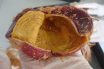
Gizzard
Lacking teeth, a chicken must grind its food in some other way, a process accomplished in its gizzard. Before reaching the gizzard, however, the chicken’s lunch must pass through its craw or crop, a pouch in the bird’s gullet where gastric juice begins to soften the food. (Nowadays, the word craw is best known in…
-
Gin
Gin was invented in the mid seventeenth century by a Dutch doctor who claimed that his new spirit cured a variety of ailments; because it was flavoured with oil from juniper berries, the doctor called his wonder tonic genever, meaning juniper, a word that derives from the Latin name for the juniper plant, juniper us.…
-
Giblets
Poultry are blessed with two sorts of giblets: the internal—including the gizzard, heart, liver, and kidneys—and the external—including the head, neck, wingtips, and feet. English acquired the word giblet in the early fourteenth century by adapting the French word gibelet, meaning game stew, such stews, made out in the wild after bagging the game, usually…
-

Gherkin
A gherkin is a small cucumber pickled in vinegar. The name of this condiment appeared in English in the mid seventeenth century as a respelling of the Dutch name of the pickle, gurkkijn. In turn, gurkkijn was invented as a diminutive of the Dutch gurk, meaning cucumber, which evolved through Polish from the Medieval Greek…
-
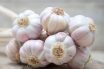
Garlic
Plants are often named by combining a word that describes the shape of their leaves or stem with the name of a similar plant that already has a name. Thus, spikenard is literally a spike of nard while garlic—less obviously—is literally a spear of leek. With garlic this origin is somewhat disguised because the Old…
-
Garble
Although no longer associated with the kitchen, the word garble was originally a culinary term. When it first appeared in English in the late sixteenth century, garble referred to the refuse or chaff left over after spices had been sifted: when you garbled something, you were separating the usable from the unusable. By the late…
-
Funistrada
Funistrada does not exist. It is an imaginary food name invented by the U.S. armed forces to see if the participants of written food surveys were paying attention to the questions or just answering randomly. In a 1974 survey, respondents ranked funistrada higher than eggplant, instant coffee, apricot pie, Harvard beets, canned lima beans, grilled…