Month: September 2020
-
Flap-dragon
The resilience of the human alimentary canal is evidenced by our ability to swallow liquids that are so potent they’re capable of bursting into flames. Brandy for example, will catch fire almost as easily as kerosene. In the late sixteenth century, this property was incorporated into a drinking game called flap-dragon: raisins were dropped into…
-
Fixin’s
Fixin’s are the savoury adjuncts that accompany both grub and vittles: fixin’s include condiments such as ketchup and relish, but they may also extend to gravy, salad dressing, and black-eyed peas, all of which help to turn a mere heap o’ food into a fine spread. In use since the early nineteenth century; the word…
-
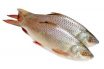
Fish
Although the origins of the names of individual fish species are often uncertain, the origin of the word fish itself is quite clear. Fish ultimately derives from an Indo-European word pronounced something like piskos. This word entered the Germanic family of languages as fiskaz, which became the Old English word fisc, which by the thirteenth…
-

Filet mignon
The mignon part of filet mignon, the name of a choice cut of beef, is a French word meaning dainty or delicate. The term filet mignon did not appear in English until the early twentieth century, but mignon itself was adopted in the early sixteenth century as minion, the name of a dainty and delicate…
-

Filbert
The word hazelnut is a native English word, dating back to at least the eighth century. In the early fifteenth century, however, hazelnuts also came to be known as filberts, a name introduced by the French, who called the nut noix de Philibert because it is usually ready to be harvested on St. Philibert’s day,…
-

Fettuccine
In Italian a large strip of something is called afetta, a little strip of something is called afettucina, and many little strips of something are called fettuccine. For this reason, a bowl full of little strips of pasta came to be called fettuccine. The particular dish known as fettuccine Alfredo—or technically fettuccine all’Alfredo—takes the last…
-

Feta
Feta is made by allowing milk to curdle, pressing the curds into a mould, and then slicing the resulting mass into slabs that are soaked in brine. One of the stages in this process—the slicing—gives feta its name, deriving as it does from the Modern Greek tyri pheta, meaning cheese slice. The pheta part of…
-
Feast
The word feast is related to the word festival, and of these two words it is festival that has remained closer in meaning to the Latin source from which they both derive. This Latin source was the word festa, the name given by the ancient Romans to public celebrations, celebrations that did not necessarily involve…
-
Fasels
When a word tries to do too much, it may end up doing nothing at all. That may have been the fate of the now defunct fasels, a word used in the sixteenth and seventeenth centuries to refer to both the chickpea and the kidney bean. The trouble with this double-duty was that it made…
-
Fart
Most people are comfortable eating in front of others, but few feel at ease when it comes to publicly acknowledging the other end of the alimentary canal. Farting, for example, especially during a meal, has long been considered outre. The ancient historian Suetonius records a story of a man who nearly died of distension after…