Month: September 2020
-

Chicken scarpariello
The original Italian name of this pasta is polio alia scarpariello, which might be translated as chicken in the shoemaker style. The name probably derives from the fact that the chicken in the dish is cooked on the bone, which means that as you’re eating the dish, you occasionally have to move your hand to…
-
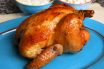
Chicken
The ubiquity of the chicken as a domestic fowl has often led to the name of this poultry being applied to humans. From the fifteenth to the nineteenth century, the word chicken could be used to refer to a child, much the way kid—a goat’s offspring—still is. Since the early seventeenth century, the word has…
-
Chichevache
Humans may consider themselves at the top of the food chain, but in folklore there are several predators that are higher, including the chichevache, a chimerical creature that feeds only on patient wives (and is therefore always on the point of starving to death). The creature’s name derives from the French chicheface, meaning thin face,…
-
Chevaline
Although it was adopted more than a hundred years ago, chevaline remains a rather unfamiliar word in English because the meat it refers to—horse—is not tremendously popular in either North America or England; most butcher shops will not even stock chevaline for fear that customers will be so disgusted they will stop buying the other…
-

Cherry
Although cherries and rhinoceroses differ in several respects, they may in fact derive their names from the same source. What links the two names is the Greek keras, meaning horn. For the animal, the ancient Greeks compounded keras—or rather its adjective form keros—with a form of rhis, meaning nose, to form rhinokeros, which entered English…
-
Chef
Chefs are literally the chiefs of the kitchen, as indicated by the tall hat that they alone are allowed to wear. Chefs started wearing these tall hats in the 1820s, although much earlier than then English cooks had sometimes worn thick, black caps to prevent their scalps from being burned as they carried roasts on…
-

Cheesecake
Although cheesecake may seem like a very modern, chi-chi dish, its name dates all the way back to the mid fifteenth century; much more recent—the 1930s—is the use of cheesecake as a slang term for an attractive or “scrumptious” woman, as a synonym, in other words, for gender labels used throughout the 1920s: dame, frail,…
-
Charger plate
The large, ornate plate that is centred on the dinner table even before the food arrives is called a charger plate. Its name reflects its function: the word charge originally meant to load and the charger plate is loaded with dishes of food as the meal begins. The “loading” sense of charge is also apparent…
-
Chard
Chard is the name of the juicy leaves of a variety of beet known variously as the white beet, the silver beet, and the sea-kale beet (botanically chard is not related to sea-kale, but it does share its silvery-white colour). The most famous variety of chard is Swiss chard, so named because it is widely…
-
Chanterelle
English has two chanterelles. One of them derives from the Latin cantare, meaning to sing, and denotes a female partridge used to lure other fowl to within gunshot, rather like the sirens of Greek mythology whose lovely singing lured sailors to their destruction on the rocks that surrounded their island. This chanterelle is also the…