Month: September 2020
-
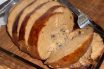
Tofurkey
A portmanteau word is one that’s created by combining two other words, and the realm of food seems particularily conducive to their formation. Some, such as brunch, which was formed from breakfast and lunch, have existed since the nineteenth century, and thus seem as familiar as an old shoe. Others have been around for decades,…
-

Tiramisu
The name of this dessert comes from the Italian phrase lira mi su, literally meaning pick me up, probably because the coffee-soaked sponge cake provides a slight caffeine boost. Tiramisu began to appear in English in the early 1980s. Much earlier, in the mid nineteenth century, pick-me-up itself emerged as a name for a stimulating…
-
Tidbit
Since the mid seventeenth century, scrumptious morsels of food have been called tidbits, a compound that derives from two words, one of them having an obvious origin, the other one not. The obvious one—bit—simply derives from the same source as the word bite: a bit is literally a piece bitten off (although the computer bit,…
-
Thrive bit
The thrive bit, like the force piece, is what Mr. Manners gets to eat after a meal has ended. In other words, the thrive bit and the force piece are the last tidbit of food left on the table, the food that only the greediest guest would deprive the mythical Mr. Manners of. This untouched…
-
Three-threads
At the end of the seventeenth century, a beverage called three-threads became a popular thirst quencher, its name deriving from its being made by mixing three different kinds—or “threads”—of beer. Soon after, some unknown tavern owner decided that, instead of mixing the three beers, it would be easier to brew a single beer that tasted…
-
Thible
The rise of ready-made breakfast cereals in the last years of the nineteenth century marked the end of the tyranny of porridge, and with it the demise of the thible, a stick used to stir porridge. The thible is an excellent example of a device that people used for centuries before giving it a name:…
-
Thermidor
This dish of cubed lobster mixed with cream, seasoned with mustard, and served in the halves of its shell acquired its name in 1894 when it was invented by a Parisian chef to honour the opening of a play by Victorien Sardou called Thermidor. In turn, the play borrowed its title from the name of…
-
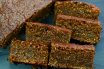
Tharf-cake
The Old English word tharf, meaning need or necessity, is first recorded in the early eighth century, and last recorded in the early fourteenth century. Just as it was vanishing as an independent word, however, tharf became part of the compound tharf-cake, a name still in use until the end of the last century. As…
-

Tequila
The evil Mexican liquor known as tequila, made by fermenting and then distilling the juice of the blue agave plant, is named after the Mexican town of Tequila, one of the places where it was first produced. The town, in turn, acquired its name from the Nahuatl phrase, tequitl tlan, meaning work place. Let us…
-
Teetotaller
Near the city of Preston, located in England’s county of Lancashire, this solemn epitaph is carved upon a grey and mossy tombstone: “Beneath this stone are deposited the remains of Richard Turner, author of the word teetotal as applied to abstinence from all intoxicating liquors, who departed this life on the 27th day of October,…