Month: September 2020
-

Tabbouleh
Made from boiled, crushed wheat, tabbouleh derives its name—sometimes spelt tabbouli—from the Arabic tabil, meaning seasoning, a reference to the zesty herbs, onion, mint, tomato, and lemon used to flavour the dish. The dish was first referred to in English in the 1950s.
-
Tabasco
The hot chili peppers used to make Tabasco sauce derive their name from Tabasco, a city in Mexico where Edmund Mcflhenny, the inventor of Tabasco sauce, acquired the seeds of the pepper plants that eventually grew into a fiftymillion-bottle-a-year business. As a sauce, Tabasco has existed since 1868; as a city in Mexico, whose name…
-
Swizzle stick
The little rod, now plastic but formerly wood, used to stir a mixed drink has been known as a swizzle stick since the late nineteenth century. The swizzle part of the name originated in the early nineteenth century as a generic name forany drink made from a mixture of intoxicating spirits. Swizzle may have derived…
-
Sweller
Invented in the 1960s as the name of a can of food bulging at both ends because of an accumulation of gases caused by spoilage (therefore making the item eligible for a discount), the noun sweller ultimately derives from an Indo-European source that made its way into dozens of languages including—of course—Medieval Gothic where it…
-
Sweetbread
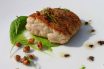
The word sweetbread, the culinary name for the pancreas and thymus, is surely the result of an early and brilliant marketing ploy on the part of butchers everywhere. People, of course, will eat anything, but it may be easier to get them to buy and eat the pancreas and the thymus if you call it…
-

Sushi
Although sushi is perhaps the one word most recognized by speakers of English as being Japanese in origin, the name of this dish was not the first word, or even the first food word, borrowed from the Japanese language. The first Japanese word to enter English was bonze, meaning Buddhist priest, which appeared in 1588.…
-
Sumptuary laws
Beginning in the fourteenth century and continuing even till the eighteenth century, the British government enforced certain laws restricting what people could wear and eat. These laws were concerned not with rationing a scarce product (as was the case with sugar during the Second World War), as with trying to prevent the nation from degenerating…
-
Suet
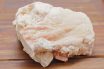
The chopped up animal fat that my mother used to strew on snow banks for sparrows to eat is called suet, a product also added to steamed puddings and mincemeat (in the Middle Ages it was also rubbed on swords and iron hinges to keep them from rusting). The name of this multi-purpose animal-product derives,…
-
Subaltern’s luncheon
In the British military a subaltern is an officer who ranks below a captain; as a result of his low status, a subaltern is often asked to work through the meal hour, leading to the phrase subaltern’s luncheon, a meal the officer partakes of by drinking a glass of water and tightening his belt. The…
-
Strudel
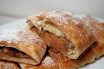
Centuries ago, a German sailor would leap out of bed with his heart in his throat if someone on deck shouted these dreadful words: “Mem Gott! Der Strudel! Der Strudel!” The fear paralyzing these sailors was evoked not by a chance encounter with the sweet and sticky pastry, but by the natural phenomenon it is…