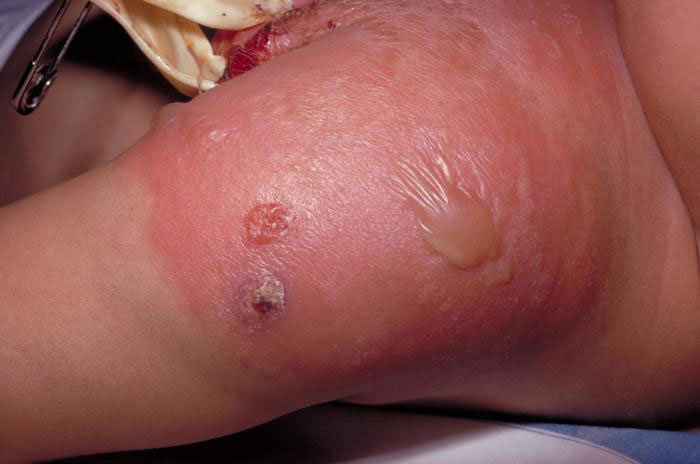
 A widespread inflammation, usually related to an inflammatory condition contained within loose subcutaneous tissue. Often associated with a bacterial infection and is frequently a precursor to abscess formation.
A bacterial infection of the skin that tends to occur in areas that have been damaged or inflamed.
An acute, diffuse, spreading infection of the skin and subcutaneous tissue.
Usually bacterial inflammation of connective tissue or of the subcutaneous tissue.
Inflammation of tissue, especially that below the skin, characterized by redness, pain, and swelling. Treatment is by antibiotics.
Inflammation of connective tissue, especially of the subcutaneous tissue.
An acute, spreading infection of the skin. Cellulitis often follows trauma to the skin; it is usually caused by a staphylococcal or streptococcal infection in otherwise healthy individuals. Common symptoms include redness, warmth, and tenderness of the affected area, as well as fever, chills, and malaise. Cellulitis is a serious disease because infection can spread via the lymph system or the bloodstream. Cellulitis is diagnosed by appearance, and the organism responsible for causing the condition may be identified in some cases by cultures of the blood. Cellulitis is treated with antibiotics.
Inflammation of the connective tissue between adjacent tissues and organs. This is commonly due to bacterial infection and usually requires antibiotic treatment to prevent its spread to the bloodstream.
Inflammation taking place in cellular tissue, and usually referring to infection in the subcutaneous tissue. A related word, cellulite, which has no medical meaning, is used in the slimming business to refer to excess fatty tissue in the arms, buttocks and thighs.
A spreading bacterial infection of the skin and subcutaneous tissues, usually caused by streptococcal or staphylococcal infections in adults (and occasionally by Haemophilus species in children). It may occur following damage to skin from an insect bite, an excoriation, or other wound. The extremities, especially the lower legs, are the most common sites. Adjacent soft tissue may be involved. Affected skin becomes inflamed: red, swollen, warm to the touch, and tender. Spread of infection up lymphatic channels may occur. Cellulitis involving the face is called erysipelas. When it affects the lower extremities, cellulitis must be differentiated from stasis dermatitis, which is associated most commonly with bilateral, chronic dependent edema and, occasionally, with deep venous thrombosis. Risk factors for cellulitis include diabetes mellitus, lymphedema, venous stasis or insufficiency, immune suppression, injection drug use, malnutrition, peripheral vascular disease, and previous skin diseases.
Cellulitis, an infectious condition that targets the skin and underlying tissues, commonly manifests in the lower extremities but has the potential to occur throughout the body. This ailment is predominantly triggered by the invasion of streptococci bacteria through a wound in the skin.
Individuals afflicted with cellulitis may experience symptoms such as fever and chills, accompanied by localized manifestations of heightened temperature, redness, and swelling. It is noteworthy that the severity of cellulitis tends to escalate in individuals with compromised immune systems, including those affected by immunodeficiency disorders.
If left untreated, cellulitis originating from a wound can potentially advance into bacteraemia, an infection of the bloodstream, as well as septicaemia, a condition characterized by the presence of toxins in the blood. Furthermore, facial infections have the capacity to spread to the eye socket, necessitating prompt medical attention.
The primary approach for treating cellulitis involves the administration of antibiotic medications, commonly including drugs from the penicillin family or erythromycin. These medications are effective in combating the bacterial infection and promoting recovery.
Extensive inflammation, particularly affecting tissues located below the skin’s surface.