 The act or process of adapting; the state of being adapted.
The act of purposefully adapting two surfaces to provide intimate contact.
The progressive adjusted changes in sensitivity that regularly accompany continuous sensory stimulation or lack of stimulation.
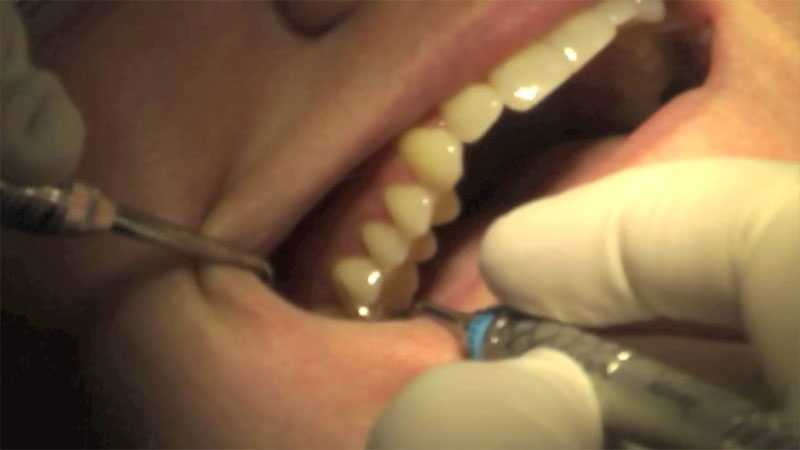
In dentistry, (A) the degree of fit between a prosthesis and supporting structures, (B) the degree of proximity of a restorative material to a tooth preparation, (C) the adjustment of orthodontic bands to teeth.
Organism change that is successful in that it helps the organism cope better with its environment or with changing conditions.
The adjustment of an organism to its environment, or the process by which it enhances such fitness.
The normal ability of the eye to adjust itself to variations in the intensity of light; the adjustment to such variations.
The decline in the frequency of firing of a neuron, particularly of a receptor, under conditions of constant stimulation.
In dentistry, (a) the proper fitting of a denture, (b) the degree of proximity and interlocking of restorative material to a tooth preparation, (c) the exact adjustment of bands to teeth.
In microbiology, the adjustment of bacterial physiology to a new environment.
The ability of a system or organ to adjust to additional stress or overload over time by increasing in strength or function.
Fitting one’s behavior to meet the needs of one’s environment, which often involves a modification of impulses, emotions, or attitudes.
Adjustment to physical and social environmental conditions as well as internal stimuli.
A change which has been or can be made to something.
Component of cognitive development that refers to the changes that occur as a result of assimilation and accommodation; ongoing process by which an individual adjusts to stressors in order to achieve homeostasis.
The phenomenon in which a sense organ shows a gradually diminishing response to continuous or repetitive stimulation. The nose, for example, may become adapted to the stimulus of an odor that is continuously present so that in time it ceases to report its presence. Similarly, the adaptation of touch receptors in the skin means that the presence of clothes can be forgotten a few minutes after they have been put on.
When a sense organ reacts less and less to persistent or repetitive stimulation. For example, after a while, a persistent smell may lead to the nose failing to signal its presence so you do not sense it; we are normally unaware of the pressure of clothes on our skin as the pressure-sensitive nerve endings in the skin adapt; regular background noise may be screened out by the cochlear nerve that links ear and brain.
Adjustment of an organism to a change in internal or external conditions or circumstances.
The modification in an organism that results in enhanced fitness without being inherited is referred to as non-inherited change. It is often misused to indicate a hereditary change that leads to greater fitness, although this usage is incorrect.
The process by which the eye adjusts to facilitate vision in low-light conditions is known as dark adaptation. It is important to distinguish dark adaptation from accommodation, which pertains to the eye’s ability to focus on objects at different distances.
The capacity of an organ or organism to adapt to its surroundings.