 Glands in the mouth that produce saliva.
Three pairs of glands in the mouth, which secrete saliva: parotid, submandibular, and submaxillary glands.
Three pairs of glands in the oral area that secrete saliva.
A gland which secretes saliva, situated under the tongue (the sublingual gland), beneath the lower jaw (the submandibular gland) and in the neck at the.
Any of three pairs of glands that secrete saliva into the mouth. The parotid glands secrete a serous fluid; the sublingual glands, a mucous fluid; and the submandibular glands, a fluid with both serous and mucous components.
A group of bilaterally located glands (parotid, submandibular, and sublingual) that produce saliva.
Three pairs of glands in the mouth that secrete saliva into the mouth. Saliva is a clear fluid that helps clean the teeth and gums, moistens food for swallowing, and adds an enzyme (chemical accelerator) to chewed food that converts complex starches into sugars. There are three major pairs of salivary glands: the submandibular glands lie toward the back of the mouth close to the sides of the jaw; the sublingual glands are located at the base of the tongue; and the parotid glands are in the back of the mouth. The parotid glands are the largest of the three pairs. From the salivary glands, which contain tiny saliva- secreting sacs, a network of ducts carry the saliva into the mouth.
A gland that produces saliva. There are three pairs of salivary glands: the parotid glands, sublingual glands, and submandibular glands. They are stimulated by reflex action, which can be initiated by the taste, smell, sight, or thought of food.
The glands situated near, and opening into, the cavity of the mouth, in which saliva is manufactured. They include the parotid gland, placed in the deep space that lies between the ear and the angle of the jaw; the submandibular gland, lying beneath the horizontal part of the jaw-bone; and the sublingual gland, which lies beneath the tongue.
Any of the glands near the oral cavity that secrete saliva. The major glands are paired and include the parotid, below the ear and inside the ramus of the mandible; the sublingual, below the tongue in the anterior floor of the mouth; and the submandibular, below the posterior floor of the mouth, medial to the body of the mandible. Minor s ah vary glands are numerous in the oral cavity and are named according to their locations: lingual, sublingual, palatal, buccal, labial, and glossopharyngeal.
There are three sets of glands that release saliva into the mouth through ducts.
The parotid glands, the largest among them, are situated on both sides of the jaw, positioned just below and slightly in front of the ears. The ducts of these glands extend forward and inward, opening inside the cheeks.
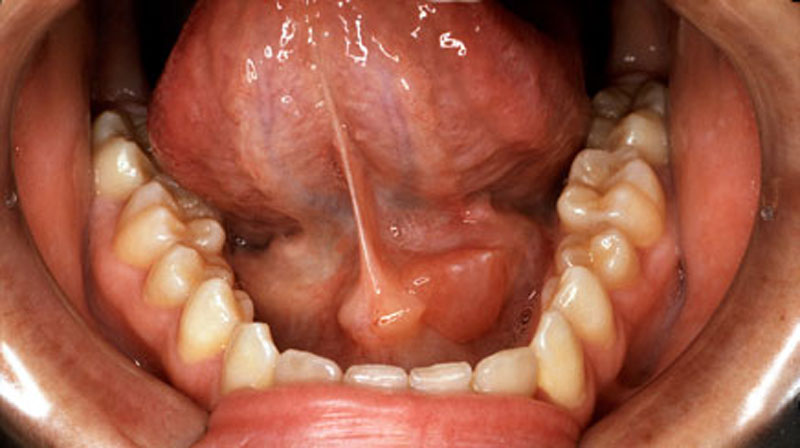
Positioned beneath the front portion of the mouth, the sublingual glands create a slight ridge on either side of the frenulum, which is the band of tissue connecting the underside of the tongue to the mouth floor. Along this ridge, there are a series of small openings through which saliva is discharged.
Situated at the rear of the mouth, adjacent to the sides of the jaw, the submandibular glands possess ducts that extend forward and discharge into the area beneath the tongue, marked by two minor enlargements—one on each side of the frenulum.
The mumps virus can lead to infection in the parotid glands, and in some cases, stones (calculi) can develop within a salivary gland or its duct. A stone located within a duct results in swelling that becomes more pronounced while eating due to blocked saliva flow; this might also induce pain. Typically, removing a stone from a duct through surgery is relatively uncomplicated. However, if the stone is situated within the gland itself, it might necessitate the removal of the entire gland.
Inadequate oral hygiene can create conditions conducive to bacterial infection within a gland, potentially resulting in an abscess. While the occurrence of tumors is uncommon, except for a specific type of parotid tumor that progresses slowly, is noncancerous, and causes no pain.
Inadequate salivation leads to a condition known as dry mouth. This issue can stem from causes like dehydration, Sjögren’s syndrome, or it might arise as a side effect of specific medications.
Glands located in the oral region that release saliva into the mouth cavity through ducts. The significant ones include three pairs known as sublingual, submaxillary, and parotid glands.