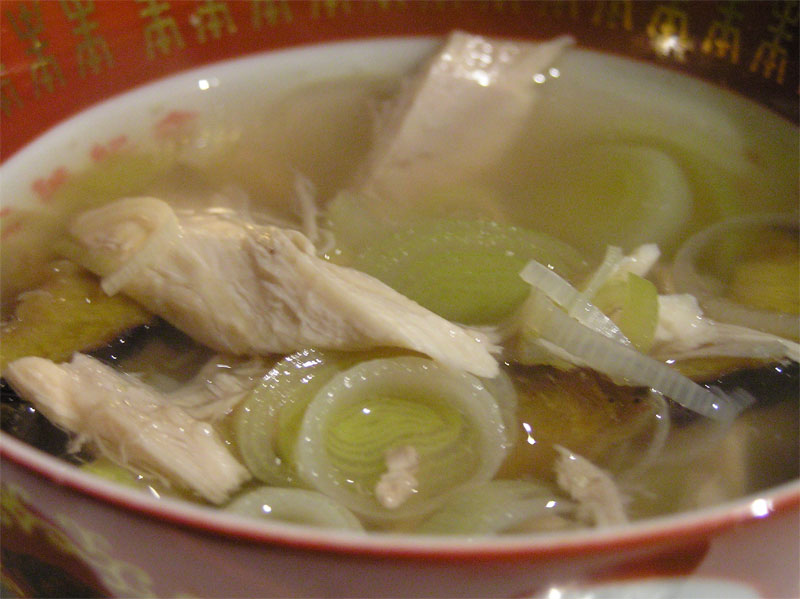
 Several dishes get their names because they contain a cock cooked with something else. Cock-a-leekie, as its name suggests, is made by boiling a cock with leeks, a dish first referred to by name in the mid eighteenth century. Likewise, cock-ale, a dish invented in the mid seventeenth century, is made by mixing beer with the minced meat of a boiled cock. A much older dish, now obsolete both in name and as a menu item, is cockagrice, made by boiling together a cock and a small pig, and then roasting them on a single spit. The last half of cockagrice—grice—emerged in the early thirteenth century and derives from the Old Norse gris, meaning a young pig; gris is actually still current in English but has been overshadowed by suckling, which appeared in the mid fifteenth century to describe a pig still being nursed by its mother. The word cockagrice closely resembles cockatrice, the name of a mythical serpent whose glance could kill, but the name Rof this mythical monster is Greek in origin and has nothing to do with either cocks or grices; nonetheless, sixteenth-century mythographers felt compelled to account for the cock in cockatrice somehow, so they reshaped the anatomy of the cockatrice, giving it the head of a cock and the tail of a serpent. It was as this fearful chicken-snake that the cockatrice subsequently appeared in the coats of arms of many British aristocrats.
Cock-a-leekie is a well-known Scottish soup that is typically prepared by boiling a fowl with leeks.