
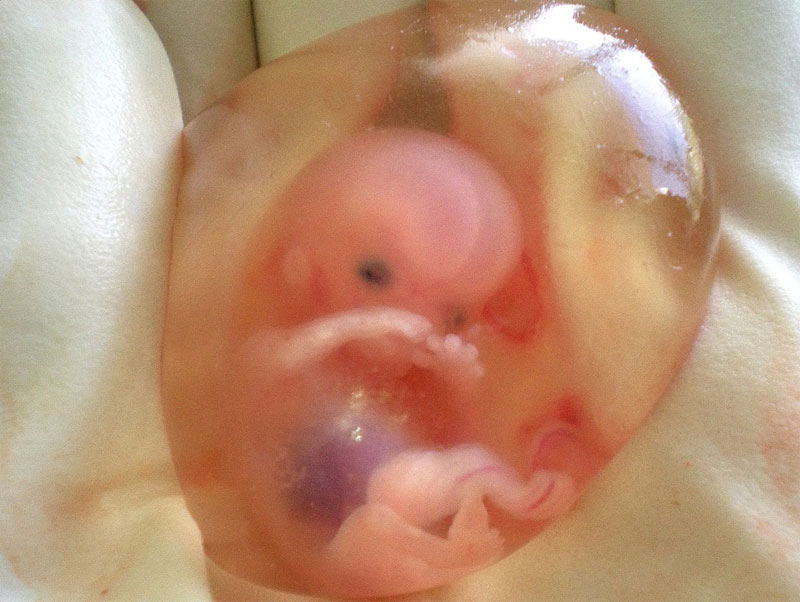
 Fluid inside the amniotic sac, the membranous enclosure within the uterus in which the fetus is suspended.
A transparent albuminous liquid made by the amnion and the fetus; surrounds and protects the fetus during pregnancy.
The fluid secreted by the amnion which immerses the fetus in the uterus prior to birth, amniotic sac.
The fluid contained in the amnion which surrounds an unborn baby.
The fluid in the uterus that surrounds the unborn child.
The clear fluid that surrounds the fetus in the uterus, held within a membrane called an amniotic sac, which protects the fetus against pressure from the mother’s internal organs and against injury from outside. The fetus swallows the circulating fluid, absorbs it into the bloodstream, and then excretes urine into it; the developing being does not drown because the lungs are not used for breathing until after birth. Mostly water, the fluid also contains other substances, such as fats (lipids) and waste fetal cells. It is such substances that are examined in the prenatal screening test called amniocentesis.
Liquid that surrounds the fetus during pregnancy, serving as protection for the developing fetus, as a shock absorber, and as medium for the exchange of materials between fetus and mother.
Liquid contained in the amnion, or amniotic sac, which surrounds the fetus in the placenta inside the womb.
The clear, watery fluid that surrounds and protects a fetus in the uterus (the organ in which the baby grows). The amniotic fluid is contained in a membrane called the amniotic sac. The fluid cushions the fetus from the pressure of the woman’s internal organs and protects the fetus from injury. Maintaining the proper amount of fluid is important to the health of the fetus. Polyhydramnios is a condition in which excess amniotic fluid is detected; it occurs once in about 250 pregnancies. Oligohydramnios is an extremely rare condition in which an abnormally small amount of amniotic fluid is produced.
The fluid contained within the amniotic cavity. It surrounds the growing fetus, protecting it from external pressure. The fluid is initially secreted from the amnion and is later supplemented by urine from the fetal kidneys. Some of the fluid is swallowed by the fetus and absorbed through its intestine.
The clear fluid contained within the amnion that surrounds the fetus in the womb and protects it from external pressure. The fluid, comprising mainly water, is produced by the amnion and is regularly circulated, being swallowed by the fetus and excreted through the kidneys back into the amniotic sac. By the 35th week of pregnancy there is about 1 litre of fluid, but this falls to 0.5 litres at term. The amniotic sac normally ruptures in early labour, releasing the fluid or ‘waters’.
A clear fluid that surrounds the fetus in the amniotic sac. Its primary functions are to suspend and protect the growing fetus, allow freedom of movement, maintain even constant temperature, and aid normal development of the fetal lungs. Volume increases from about 50 ml at 12 gestational weeks to around 800 ml at 38 weeks. The fluid is constantly being circulated by the fetus swallowing fluid, urinating, and inhaling/exhaling fluid during fetal respiration. Samples of amniotic fluid may be collected (amniocentesis) to identify fetal chromosomal abnormalities, state of health and maturity.
The fluid within the amniotic sac, within which the embryo floats.
The fluid residing within the placental sac, serving as a protective cushion for the developing fetus and contributing to the regulation of temperature within the placental environment. Amniotic fluid additionally encompasses fetal cells within its composition.
Amniotic fluid, often referred to as the “waters,” is a transparent and watery fluid that envelops the fetus within the uterus, residing within the amniotic sac—a delicate, membranous pouch. This fluid serves as a cushion, safeguarding the fetus against pressure exerted by the mother’s internal organs, facilitating freedom of movement.
Amniotic fluid is generated by the cells lining the amniotic sac and undergoes continuous circulation. The fetus ingests the fluid, which is subsequently absorbed into the fetal bloodstream and subsequently eliminated as urine by the kidneys. Composed primarily of water, approximately 99 percent, the remaining portion comprises diluted concentrations of substances present in blood plasma, accompanied by fetal cells and lipids (fats).
Amniotic fluid becomes evident within the first week following conception and progressively augments in quantity until around the tenth week, at which point it experiences a significant surge. Subsequently, from approximately 35 weeks of gestation, the volume of fluid initiates a gradual decline.
In certain pregnancies, a condition known as polyhydramnios may develop, characterized by the excessive accumulation of amniotic fluid. Conversely, in rarer instances, oligohydramnios may occur, signifying an inadequate amount of fluid formation.