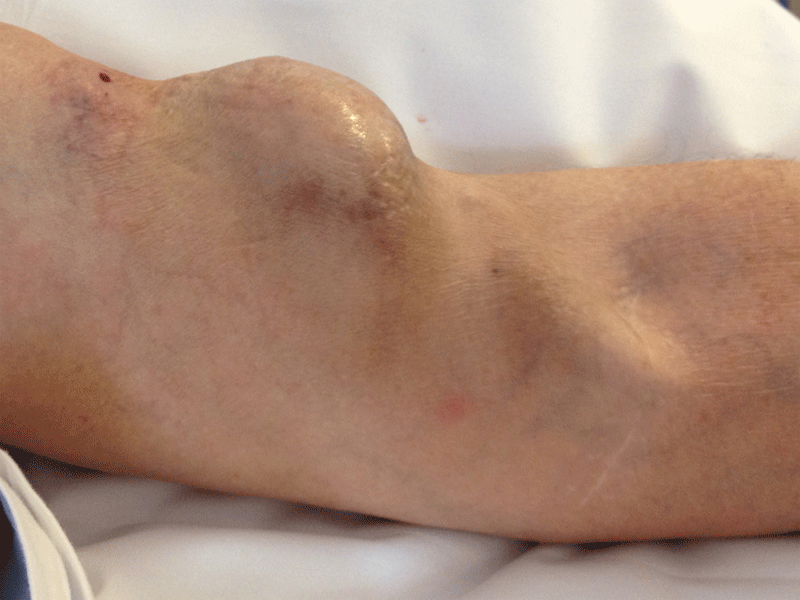
 A surgical joining of arterial and venous vessels in order to gain access to circulation during hemodialysis
An abnormal direct connection between an artery and vein. Blood flows from the artery into the vein through the fistula, bypassing the bed of capillaries (very small blood vessels) that normally lie between them. If a fistula is large, a substantial proportion of oxygen-rich blood bypasses the capillary bed, forcing the heart to work harder to supply the affected part of the body with blood and oxygen. Oxygen deprivation can result.
An arteriovenous fistula refers to an abnormal connection that directly links an artery to a vein. It can either be present from birth or result from injury. In certain cases, a fistula may be intentionally created through surgical intervention to provide convenient access to the bloodstream, such as in dialysis procedures. Arteriovenous fistulas are significant in their impact on blood flow patterns and require appropriate management and treatment as necessary.
If a fistula is in close proximity to the outer layer of the skin, it can give rise to a minute, rhythmic enlargement. In the event of multiple fistulas being present within the lungs, the absorption of oxygen into the bloodstream might encounter hindrances, thereby leading to the manifestation of cyanosis (a bluish tint of the skin) and challenges in respiration during physical exertion.
In instances where a solitary fistula is producing symptoms, it is frequently feasible to surgically excise it and securely suture the blood vessels’ extremities. Nevertheless, if there exists a multitude of fistulas, the option of surgery becomes impracticable.