Author: Glossary
-
Implant surface
External surface of an implant body; the façade of an implant, including its macro and micro surface shape and texture. In the manufacture of an implant, various surface treatments may be used, including, but not limited to, polishing, machining, acid‐etching, and grit‐blasting, to create the desired surface topography.
-
Implant‐supported prosthesis (ISP)
Replacement for missing natural teeth that receives retention, support, and stability from dental implants.
-
Implant success
Status of a dental implant based on predetermined success criteria.
-
Implant substructure
The metal framework of a eposteal dental implant that is embedded beneath the soft tissues, in contact with the bone, and stabilized by means of endosteal screws. The periosteal tissues retain the framework to the bone. The framework supports the prosthesis, frequently by means of dental implant abutments and other superstructure components.
-
Implant stiffness
Stiffness or rigidity of an implant body as determined by mechanical testing. Influenced by implant body design, composition, and diameter.
-
Implant stability quotient (ISQ)
Ratio used to evaluate implant and/or abutment stability using resonance frequency analysis (RFA).
-
Implant stability quotient (ISQ)
Measure of the stability of a dental implant (from 1 to 100, 100 being the highest degree of stability) obtained by resonance frequency testing.
-
Implant stability
Clinical evaluation of the degree of fixation of a dental implant.
-
Implant splinting
Act of connecting dental implants to each other or to natural teeth to enhance the strength, stability, and stress distribution of the supporting units.
-
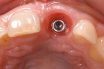
Implant soft tissue management
Procedures performed to maintain periodontal health of the soft tissues surrounding oral implants, including nonsurgical procedures such as scaling, polishing, and oral hygiene instruction at defined intervals.