Category: A
-
Absent parent
A parent who does not live with a child, including a parent who has lost custody of the child, a parent who has abandoned a child, and a father who has never acknowledged paternity. Though absent, such parents retain the parents’ responsibility of providing support for a child, so various child support agencies spend great…
-
Ability test
A type of test designed to measure performance of a particular skill or skills, such as a typing test; also an alternate term for intelligence test.
-
Abandonment
In family law, deserting a child or leaving the child without effective supervision and provision for basic needs for too long a time. The age of the child, nature of the supervision (or lack of it), and the length of the unsupervised period all affect legal judgment as to whether abandonment has occurred, and state…
-
Congenital varicella syndrome
When a pregnant woman contracts chicken pox (varicella), there is a 25% incidence of transmission of the infection to the fetus. However, a very small number of these babies will show evidence at birth that they were ever infected. Their condition is called congenital varicella syndrome (CVS).
-
Atonic seizures
Atonic seizures are also referred to as drop attacks and epileptic fall. Hughlings Jackson first described “sudden epileptic falls” in 1886. Unlike most epileptic seizures that involve either positive motor behavior (e.g., tonic, clonic, and myoclonic) or the absence of motor behavior (e.g., absence seizures), atonic seizures involve negative motor phenomena. The primary characteristic of…
-
Absence seizure
An absence seizure, formerly known as a petit mal, is defined as a sudden, involuntary, transient alteration in cerebral function due to abnormal discharge of neurons in the central nervous system. Absence seizures fall in the category of generalized seizures, of which there are two types: primary and secondary. Primary generalized seizures are characterized by…
-
Amphetamine psychosis
Amphetamines are stimulants to the central nervous system. Their effect is similar to that of the body’s own adrenaline. Even though amphetamines mimic the effects of adrenaline, they act for a much longer time in the body. Illicit synthesis and use of methamphetamine is the chief type of amphetamine abuse in North America. Although they…
-
Acute lymphocytic leukemia
Acute lymphocytic leukemia is a malignant condition in which immature white blood cells are produced in abnormally large quantities and disrupt normal blood cell growth. The blood cells, also referred to as blasts, accumulate in bone marrow, blood, and lymphatics, and they circulate throughout the blood and lymphatic system. Vital organs, including the lungs, kidney,…
-
Andersen disease
Andersen disease is one of the glycogen storage diseases and is characterized by cirrhosis and liver failure. Individuals with glycogen storage diseases are unable to break glycogen down to glucose, thus causing abnormal accumulation of glycogen in the liver or muscle. Storing excess amounts of glycogen results in muscle weakness and an enlarged liver. Individuals…
-
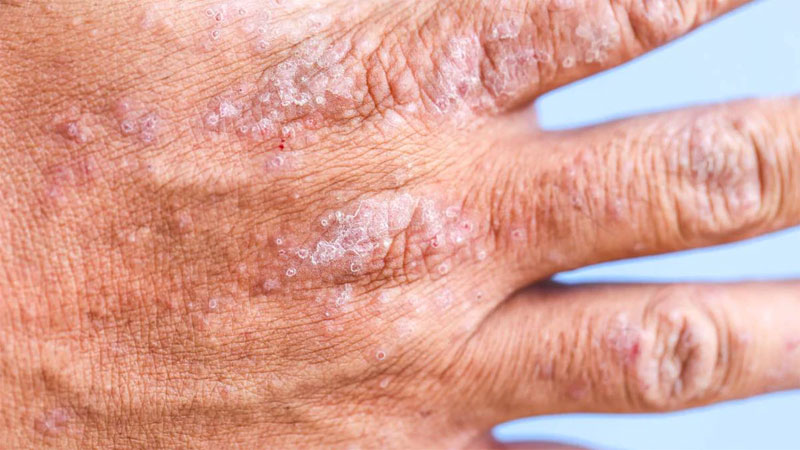
Atopic dermatitis
Atopic Dermatitis is a skin disorder that occurs in adults and children. The skin is hypersensitive and reacts with inflammation. The skin can become extremely itchy, and if the condition becomes chronic, the skin may become scaly and thick. Skin inflammation of genetic origin. Inflammation of the skin. This form of dermatitis is closely linked…