Category: A
-
Axons
Branchlike structures on one end of a neuron responsible for taking information away from the cell body. The fiber-like extension of a neuron through which the cell sends information to target cells. The long-nerve cell process that conducts impulses from the cell body. A nerve fiber that carries nerve impulses away from the cell body…
-

Autoimmune disorder
A destructive condition where a person’s immune system attacks its own tissue. Occurs when the body creates antibodies against itself.
-

Antinutrients
Compounds in foods that can interfere with the absorption of good nutrients and minerals.
-
Anandamide
A fatty acid neurotransmitter that’s been called “the bliss molecule.” Named after the Sanskrit word for “bliss,” an endogenous analogue of tetrahydrocannabinol, similar in structure and function to THC. A neurotransmitter that binds to and activates cannabinoid receptors on brain cells.
-
Amygdala
The part of the brain (an element of the limbic system) responsible for controlling emotional response. In the structure of the brain, part of the basal ganglia located on the roof of the temporal horn of the lateral ventricle at the inferior end of the caudate nucleus. It is a structure in the forebrain that…
-
Alpha linolenic acid (ALA)
An omega-3 fatty acid that bolsters cardiovascular health and curbs inflammation. Alpha-linolenic acid (ALA), a type of polyunsaturated omega-3 fatty acid, is predominantly present in seed oils such as canola oil, flaxseed oil, and walnut oil. It is also found in purslane and other broad-leaved plants, as well as soybeans. ALA is believed to have…
-

Adaptogens
A special class of foods that support the endocrine system (the collection of glands that produce and regulate hormones, metabolism, sleep, and mood, among other functions) and the immune system in a natural way; help the body adapt to stress and restore the body’s natural state of balance. A term used by herbalists to refer…
-
Axial skeleton
Consists of the bones found around the axis, or imaginary midline of the body, including the skull, vertebral column, sternum, and the ribs. The bones of the head and the trunk: skull, vertebral column, thorax, and sternum. The bones that make up the vertebral column and the skull. The portion of the skeleton that includes…
-
Autonomic nervous system (ANS)
Part of the efferent nervous system; consists of efferent neurons that transmit impulses to involuntary muscles and glands. A structure that regulates the involuntary functions of the body’s internal organs, including the heart, stomach, and intestines; also controls some muscle function. The part of the nervous system that controls the cardiovascular, digestive, reproductive, and respiratory…
-
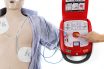
Automated external defibrillator (AED)
A portable electronic device that automatically diagnoses the potentially life-threatening cardiac arrhythmias of ventricular fibrillation and ventricular tachycardia in a patient and is able to treat them through defibrillation.