Category: A
-
Anthela
Inflorescence in some Juncus and Cyperaceae: a panicle in which the lower branches overtop the upper ones, or a cymose corymb with the lateral flowers higher than the central ones.
-
Anthecium
In grasses, the part of the spikelet carrying one flower, its lodicules and glumes, and sometimes the segment of the spikelet rachis adjoining them.
-
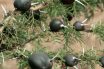
Ant-galls
Inflated, ultimately woody structures from the (usually) fused bases of stipules in some Acacia species; hollow, and often inhabited by ants.
-
Antesepalous
Opposite to a sepal and not alternate with it.
-
Antepetalous
Opposite the petals.
-
Antenna
Slender structure on the pollinium of orchid genus Catasetum which, when touched, causes the pollinia to be catapulted out.
-
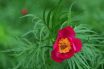
Anomalous
Out of the ordinary, unlike others in its group. Irregular; deviating from or contrary to normal.
-
Annulus (plural annuli)
Ring; in ferns, the ring of thick-walled cells involved in opening the sporangium. In mushrooms, the membranous remnant of partial veil found on mature stems of some species. A ring-shaped structure; a ring. Also spelled anulus.
-
Annulosulcate
(Of pollen) with an encircling sulcus.
-
Annular
In the shape of a ring; used of any organs arranged in a circle. The term “annular” denotes a characteristic shape resembling a ring. It is used to describe specific anatomical structures like ligaments and, in the field of dermatology, the appearance of circular skin rashes such as ringworm. Furthermore, the term can be employed…