Category: A
-
Alveolar gingival f
Collagenous fiber that radiates from the bone of the alveolar crest into the lamina propria of the free and attached gingiva.
-
Alveolar crest f
Attaches to the cementum just apical to the cementoenamel junction and runs apically and laterally to insert into the surface of the alveolus.
-
Apical periodontal c
The most common odontogenic cyst, involving the apex of a root and resulting from the inflammatory reaction to a nonvital pulp.
-
Apical c
Surgical removal of tissue or foreign material surrounding the apex of a tooth. Also known as periapical curettage.
-
Anterior c
One or more maxillary incisors positioned on the lingual side of the mandibular incisors when the jaws are closed.
-
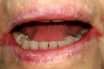
Angular cheilitis
Inflammation affecting the corner angles or commissures of the mouth. An inflammation of the corners of the mouth. The cause is bacterial infection of the skin. Erythema and painful fissures are present. This condition usually occurs in edentulous patients.
-
BP (abbrev)
Bisphosphonate.
-
Alveolar b. proper
Compact bone that composes the alveolus (tooth socket). Also known as the lamina dura or cribriform plate, the fibers of the periodontal ligament insert into it.
-
Alveolar bone
Bony portion of the mandible or maxilla in which the roots of the teeth are held by periodontal ligament fibers. Alveolar bone is formed during tooth development and eruption. Spongy part of jaw bone that supports the teeth. Part of the jawbone to which the teeth are attached. The bony tissue or process of the…
-
Aspiration b
The aspiration of fluid through a needle for the purpose of establishing a diagnosis.