Category: B
-
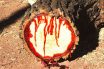
Bloodwood
Tree native to Africa that has red juice or red wood and is related to the Eucalyptus.
-
Bladderwort
Aquatic plant with finely divided, submerged leaves and bladder-like floats that catch and digest small organisms.
-
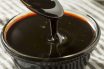
Blackstrap Molasses
Liquid by-product that remains after sugar has been extracted from sugar cane or sugar. One of Gayelord Hauser’s wonder foods. Hauser (1895-1984) was born in Germany, emigrated to the United States in 1911, but returned to Europe soon afterwards, apparently with incurable tuberculosis of the hip. Acting on advice that he must eat only natural…
-
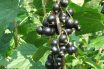
Black Currant
Shrub that yields a flavorful fruit. Black Currant also known as European Black Currant.
-
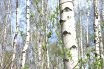
Birch
Common name for a family of hardy trees with silvery or whitish bark that yields salicin, which is a natural aspirin. Birch also known as Sweet Birch, Black Birch, White Birch, and Paper Birch.
-
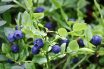
Bilberry
The small, sweet, blue-black fruit of a low deciduous shrub. Bilberry also known as Whortleberry, Blueberry, Huckleberry, Hurtleberry, and European Blueberry. The European huckleberry (Vaccinium myrtillus). It is promoted as a treatment for ocular and circulatory disorders and as a treatment for diarrhea. Its mechanisms of action are: antioxidant, astringent, collagen stablizer, and vasoprotector. The…
-
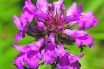
Betony
An ornamental astringent herb. Good substitute for black tea; infusion resembles the taste and is caffeine-free. Helps relieve headache, and has general tonic action.
-
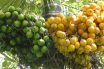
Betel Palm
An Asian palm with husk-covered orange fruit.
-
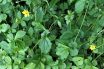
Bennet
A European herb with yellow flowers. Bennet also known as Herb Bennet.
-
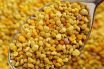
Bee Pollen
The fertilizing element of flowering plants that consists of dustlike, yellowish grains or spores. Bee pollen has been marketed as a dietary supplement and used by athletes for many years. While bee pollen contains many essential nutrients (such as protein, vitamins, and minerals), its ability to improve athletic performance is unlikely in a well-nourished athlete.…