Category: B
-
Bain-marie
A bain-marie is a pan full of water into which a vessel containing a sauce is placed; the water in the outer pan is then brought to a near boil, which heats the sauce without danger of burning it—a double boiler is therefore a kind of bain-marie. The name of this device, which appeared in…
-
Bagel
Going back at least to the early seventeenth century in Poland, bagels were given as presents to women who had just given birth; this doughy gift nourished the exhausted mother, but the shape of the bagel—a yonic ring—may also have represented the cycle of life newly embodied by mother and child. The name of this…
-
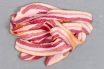
Bacon
The term back bacon is redundant in that bacon derives from the Old German bach, meaning back; bacon, after all, is cut from the back of the pig, although the sides, which contain more fat, can also be used to produce this cured meat. The word bacon did not appear until the early fourteenth century;…
-
Backsplash
A backsplash is a panel placed behind a stove top to protect the wall from being splashed by the soup-spoon of an exuberant or gesticulating chef. The name of this panel appeared in the early 1950s in imitation of the word dashboard: dashboards were invented, or at least named, in the mid nineteenth century as…
-
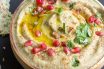
Baba ganoush
This dish of mashed eggplant and sesame seed paste has an Arabic name that means spoiled father, according to Middle Eastern food lore, it alludes to an elderly, toothless father—or baba—whose daughter had to mash his food because he wasn’t able to chew it.
-
Baba
In the early eighteenth century the Polish king Stanislaw Leszczynski was exiled from his country, whereupon he took up residence in Lorraine, France. There he encountered a cake known as kugelhopf, which he enjoyed but found a bit dry, and accordingly began steeping it in rum before eating it. So delicious was the king’s innovation…
-
Penicillin G (benzylpenicillin)
The original penicillin (antibiotic) molecule, discovered by Alexander Fleming in the 1920s, on spoiled bread (mold). In the 1940s, scientists at the U.S. Department of Agriculture in Peoria, Illinois (in America) discovered how to produce commercial quantities of Penicillin G by utilizing the fungus Penicillium chrysogenum, which they found on a cantelope in Peoria, Illinois.…
-
Bundesgesundheitsamt (BGA)
German Federal Health Organization. The German Government agency that must approve new pharmaceutical products for sale within Germany, it is the equivalent of the U.S. Food and Drug Administration (FDA).
-
Buffy coat (cells)
The layer of white blood cells (leukocytes) that separates out when blood is subjected to centrifugation. A light stratum of blood seen when the blood is centrifuged or allowed to stand in a test tube. The red blood cells settle to the bottom and, between the plasma and the red blood cells, a light-colored layer…
-
B.t. tenebrionis
One of the approximately 30 subspecies groupings within the approximately 20,000 different strains of the soil bacteria known (collectively) as Bacillus thuringiensis (B.t.). When eaten (e.g., as part of a genetically engineered plant), the protoxin proteins produced by B.t. tenebrionis are toxic to certain insects.