Category: B
-
Bifurcation
The site where a division into two parts occurs, as where a tooth divides into two roots. A place where something divides into two parts. In law, breaking a case or trial into two parts so that the question of divorce may often be separated from other related issues, such as child support, custody, visitation…
-
Bidirectional crest distraction
Distraction approach designed to overcome the inherent difficulty in controlling the distraction vector in conventional, unidirectional devices. An additional inclination rod allows for buccal‐oral (lingual) distraction in addition to vertical distraction.
-
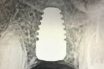
Bicortical stabilization
Practice of engaging both the superior and inferior cortices of bone at the time of implant placement. For an edentulous anterior mandible, the tip of the implant engages the inferior cortex while the neck of the implant engages the superior cortex to maximize initial stability of the implant. The engagement of a dental implant with…
-
BIC (abbrev)
Bone‐to‐implant contact.
-
bFGF (abbrev)
Basic fibroblast growth factor.
-
Beveled incision
Technique by which incisions are made at an acute angle (less than 90°) to the gingival or mucosal surface, rather than perpendicularly.
-
Beveled flap
Section of soft tissue outlined by a surgical incision made at an acute angle to the gingival or mucosal tissue.
-
Bevel
A slanting edge. A surface slanting from the horizontal or vertical.
-
Betamethasone
An oral, topical, and inhaled glucocorticoid with a long half‐life. A very strong corticosteroid drug. A synthetic corticosteroid drug with effects and uses similar to those of prednisolone. The side-effects are those of cortisone. A corticosteroid which has an action comparable to that of prednisolone, but in much lower dosage. In the form of betamethasone…
-
Beta‐lactam antibiotics
Antibiotics containing a beta‐lactam ring; the penicillins, cephalosporins, monobactams (aztreonam), and carbapenems (imipenem‐cilastatin). Any of the antimicrobial drugs, such as penicillins or cephalosporins, that kill germs by interfering with the synthesis of bacterial cell walls.