Category: B
-
Balancing occlusal surfaces
The occluding surfaces of dentures on the balancing side (antero‐posteriorly or laterally) that are developed for the purpose of stabilizing dentures.
-
Balancing interference
Tooth contact not in harmony with balanced articulation on the side of the translating condyle as the mandible moves in lateral excursions. Unwanted contact(s) of opposing occlusal surfaces on the nonworking side that are not in harmony with balanced articulation.
-
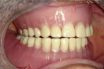
Balanced occlusion
Existing or developed simultaneous harmonious occlusal contact of the teeth throughout the dental arch during mandibular centric and eccentric movements; especially important for removable complete dentures to achieve stability during function. The ideal and equal contact of the teeth of the working side of the jaw by the complementary contact of the teeth on the…
-
Balanced articulation
Bilateral anterior and posterior occlusal contacts that occur simultaneously when the teeth are in centric and eccentric positions. This is determined not only by positions of the teeth but also by the influence of the temporomandibular joint.
-
Bacteriostatic
Inhibiting or retarding the growth of bacteria. An agent that inhibits the growth or multiplication of bacteria. Preventing the growth of bacteria with-out killing them. Referring to a substance which does not kill bacteria but stops them from multiplying. The action of a drug or antibiotic which results in the inhibition of growth and of…
-
Bacteriostat
An agent that inhibits or retards the growth and multiplication of bacteria. A class of antibiotics or chemicals which prevents the growth of bacteria, in contrast with a bacteriocide, which kills bacteria.
-
Bacteriolytic
Characterized by or promoting the dissolution or destruction of bacteria. Referring to a substance which can destroy bacteria.
-
Bacteriogenic
Caused by bacteria. Bacteria producing.
-
Bactericide
An agent capable of destroying bacteria. Also termed bacteriocide. Anything that destroys bacteria. A substance which destroys bacteria. Anything which kills bacteria; the term is, however, usually applied to drugs and antiseptics which do this Hence bactericidal. An agent that destroys bacteria, but not necessarily their spores.
-
Bacterial succession
A process of colonization by oral bacteria in a predictable, temporal pattern, with resident organisms altering the environment, allowing new organisms to become established or certain bacteria to achieve dominance.