Category: C
-
Cannibal
When Columbus first visited the West Indies he encountered a nation of people who called themselves the Galibi, a name meaning brave people. Because the pronunciation of Galibi varied slightly from dialect to dialect, European explorers sometimes heard the name pronounced as Carib and sometimes as Caniba, prompting different words to arise from each variant.…
-
Cannelloni
The slender tubes of pastry stuffed with seasoned meat or even with cream and chocolate take their name, cannelloni, from the Italian canna, meaning reed or stalk, a tube through which a plant’s nutrients flow. In turn, the Italian canna goes back to a Latin source (also spelt canna), that developed via French into words…
-
Candy
The word candy emerged in English in the early fifteenth century, a few decades before the appearance of sweetmeat, another word that refers to a wide variety of sugary morsels. Candy and sweetmeat were originally distinguished in so far as candy tended to refer only to flavoured pieces of crystallized sugar, while sweetmeat could also…
-
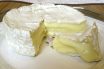
Camembert
Camembert cheese was invented during the French Revolution when a certain Marie Harel combined a cheese-making technique used in Normandy with one used in the Brie region. Harel’s daughter began selling this new cheese in the village of Camembert, whose name was bestowed upon the dairy product when Napoleon rode through the village, tried some…
-
Calzone
The Latin calx, meaning heel, became the Latin calceus, meaning shoe, which became the Italian calza, meaning stocking, which became the Italian calzone, meaning trouser leg, which was bestowed upon a kind of baked or fried turnover stuffed with cheese and other fillings because of its resemblance to the billowing leg of a trouser. Another…
-
Caesar salad
Caesar salad takes its name from Julius Caesar, the most famous Roman emperor, but does so only indirectly. For twenty centuries after his death, the legacy of the emperor inspired thousands of Italian parents to name their sons Caesar. One of those sons was Caesar Cardini, an Italian who immigrated to Tijuana, Mexico where he…
-
Caddy
Material abundance breeds linguistic abundance: well-heeled individuals with time on their hands and possessions galore often invent words that are, strictly speaking, both needless and redundant. One might, for example, simply store tea in a box, but one doesn’t, at least not if one wants to impress one’s dinner guests. Instead, one stores tea in…
-
Caboose
Since the mid eighteenth century, the kitchen of a war ship has been called the galley, while that of a merchant ship has been called the caboose. The origin of the word galley is unknown, but caboose derives from the Dutch kabuis, a shortened form of kaban huis, meaning cabin house. In the mid nineteenth…
-

Cabbage
Considering that we buy cabbages in heads, it’s hardly surprising that the word cabbage literally means swollen head: the name derives from the Old French caboce, which in turn may have developed from a compound formed from the Latin caput, meaning head, and the Old French boce, meaning a swelling. Words related to cabbage therefore…
-
Cytotoxic T Cells
Also called killer T cells. T cells that have been created by stimulated helper T cells. The T refers to cells of the cellular system rather than to cells of the humoral system (B cells). Cytotoxic T cells detect and destroy infected body cells by use of a special type of protein. The protein attaches…