Category: C
-
Cycle time
Equivalent to production available per day (per hour, per minute, etc.) over output units required per day (per hour, per minute, etc.).
-
Cyclamate
Synthetic, non nutritive sweetener that is 25 times sweeter than sucrose (discovered in 1937). Nonnutritive sweetener; sodium cyclamate. When fed to rats in very high amounts, sodium cyclamate was found to produce bladder tumors. On the basis of this finding, the Delaney Clause of the U.S. Pure Food and Drug Act was exercised, and this…
-

Cut in
To incorporate solid fat in dry ingredients until finely divided by using a cutting motion with two knives or a chopping motion with a pastry blender. To amalgamate, specifically abridging and one or more desiccated constituents, through the utilization of a duo of blades or akin implements, one in each hand, by performing a cutting…
-
Cut
To divide a food using a knife or scissors. A reduction in the number or amount of something. A place where the skin has been penetrated by a sharp instrument. Separating or dividing of tissues by use of a sharp surgical instrument such as a scalpel. To separate into pieces with the blade of a…
-
Custard
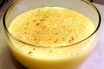
A cooked or baked sweetened mixture of milk and eggs. A confectionary dish composed of milk and eggs, blended with saccharine elements and subjected to thermal processing, either through a method of boiling that results in a tender pudding consistency or via baking that yields a comparably solid texture. This amalgamation of eggs and milk…
-
Curry
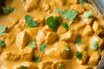
A combination of dry ground blend of many spices cooked slowly in butter and oil or sour milk before adding the fish, meat, eggs, or vegetables that are to be curried. In India, where it originated, recipes for curry powder vary from region to region and even from caste to caste. As a result, importers…
-
Curing agent
Substances used to impart flavors and/or colors to food and to increase shelf-life of specific products like meats. A substance that increases the rate of loss of plasmids during bacterial growth.
-
Curing
A food process used with pickling and certain types of meats. In bacteriology, the loss of episomal material from a bacterial population by the inhibition of its further replication. The process of safeguarding fish or meat involves salting and smoking it. This method of preservation helps to extend the food’s shelf life, making it last…
-
Cumin
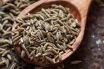
An annual herb with a flavor similar to caraway, with leaves, seeds and flowers used for flavoring. Although it is now considered a somewhat exotic spice, one associated with Middle Eastern cookery, English writers referred to cumin as early as the ninth century, long before references to other spices appeared. The immediate source of cumin…
-
Culture change
A term used in modern quality management to indicate the aim, philosophy, vision, strategy, skills, resources, rewards and organization to coordinate successful transformation.