Category: C
-
CAM
Crassulacean acid metabolism: a metabolic pathway for carbon dioxide fixation; CAM plants fix carbon dioxide during the night, and CAM is especially common in plants of hot and arid areas.
-
Calyx tube
The tube (as distinct from the calyx limb) in a gamosepalous calyx; sometimes used for hypanthium. The tube formed when the lower parts of the sepals are fused together.
-
Calyx limb
The limb as distinct from the tube in a gamosepalous calyx; the lobes, the expanded, nonjoined part.
-

Calyx (plural calyces)
The outermost whorl of floral organs, often divided into sepals.
-
Calyptrate
Cap-like (e.g. of petals, when they fall off as a coherent unit). Having a delicate skirtlike covering that separates from the spore wall proper.
-
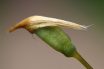
Calyptra
A cap-or lid-like covering of flowers or fruits, as in Myrtaceae.
-
Calyculus
In Rubiaceae, a structure formed from reduced leaves and stipules, which are fused to varying degrees to form a structure often resembling a four-lobed tubular (or cuplike) calyx limb; In an orchid flower, a small cup or circle of bract-like structures outside of the sepals; In some Compositae/Asteraceae, a subsidiary circle of small bracts outside…
-
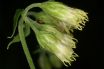
Calyculate
Having bracts around the calyx, or with an involucre resembling an outer calyx. Having an accessory calyx outside of the true.
-

Calycle
A row of small leaves or bracts at the base of the calyx [unusual term].
-
Calycine
Relating to the calyx; Calyx-like.