Category: C
-
C-Src
A cellular non-receptor tyrosine kinase.
-
C-jun NH(2)-terminal kinase
Enzymes that belong to the family of the MAPK superfamily of protein kinases. These kinases mediate a plethora of cellular responses to such stressful stimuli, including apoptosis and production of inflammatory and immunoregulatory cytokines in diverse cell systems. cf: MAPK.
-
Clinical sensitivity
Clinical sensitivity, also called tooth sensitivity or dentin hypersensitivity, is the experience of a sensation ranging from mild discomfort to shooting pain caused by the exposure of susceptible teeth to thermal (cold or hot) stimuli.
-
Cavernous resorption
Bone loss of the alveolar processes of the maxilla and/or mandible due to osteoclastic activity, either physiologically or pathologically, resulting in hollow spaces within the maxilla and/or mandible.
-
Clinical attachment level
The distance from the cementoenamel junction to the tip of the periodontal probe during usual periodontal diagnostic probing.
-
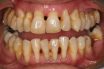
Chronic periodontitis
An infectious disease that presents with inflammation within the supporting tissues of the teeth. Progressive attachment and bone loss are accompanied by pocket formation and/or recession of the gingiva. Chronic periodontitis is the most frequently occurring form of periodontitis. It is found most often in adults but can also occur in young patients. Plaque and…
-
Crater defects
A cup‐ or bowl‐shaped defect in the interalveolar bone with bone loss nearly equal on the contiguous roots. The facial and lingual palatal walls may be of unequal height. A type of intrabony defect, a crater also may be classified by the number of bony walls (i.e., one‐, two‐, or three‐walled); combination defects also exist.…
-
Circumferential defects
A vertical defect that includes more than one surface of a tooth, e.g., a vertical defect that includes the mesial and lingual surfaces of a tooth.
-
Condensing osteitis
Defined as a pathologic growth of maxillomandibular bones characterized by mild clinical symptoms. The bone thickening reflects the impaired bone rearrangement in response to mild infection of dental pulp. A variant of chronic apical periodontitis which represents a diffuse increase in trabecular bone in response to irritation. Radiographically, a concentric radiopaque area is seen around…
-
Chemically induced l
A lesion resulting from local contact with chemically irritating substances such as aspirin, cocaine, pyrophosphates, detergents (e.g., sodium lauryl sulfate), smokeless tobacco, betel nut, and tooth‐ whitening agents.