Category: C
-
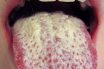
Candidiasis (thrush)
An infection caused by the fungus genus Candida. It is associated with multiple influencing factors that include (a) the use of broad‐spectrum antibiotics, (b) diabetes mellitus, (c) xerostomia, (d) suppression of the immune system, and (e) pregnancy. Clinically, it appears as soft, white, curd‐like plaques that can be wiped off, leaving an erythematous area. A…
-
Candida albicans
The utmost pathogenic species of Candida, which under some circumstances may cause infections; however, typically it is an innocuous inhabitant of mucous membranes. A unicellular budding fungus which is the principal pathogenic species causing candidiasis (moniliasis). A yeast (fungus) causing oral, intestinal, vaginal, or skin infections. One type of Candida which is usually present in…
-
Candida ssp
A yeast‐like fungus often found in association with oral diseases such as “thrush” (oral candidiasis). Usually stains gram positive, is aerobic, and is significantly larger than bacteria. Most frequently encountered species is C. albicans.
-
Cancer reconstruction
Tumor resection of the jaws often leads to discontinuity defects that need extensive bone reconstruction and restoration with implant‐supported prostheses.
-
Cancellous bone graft
Graft consisting of medullary bone.
-
Cancellous bone
The lattice‐like, reticular, or spongy or part of bone; the tissue found in the medulla of the bone; it has a variable trabecular pattern and is made of interstitial tissue that may be hematopoietic. Also used to describe a graft derived from cancellous bone, which is a spongy type of bone containing a trabecular structure…
-
Canaliculus
Minute canal extending to the lacunae of bone. In anatomy, small channels in bone connecting the lacunae with one another or with the Haversian canals. Little canal, e.g. a canal leading to the Haversian systems in compact bone, or a canal leading to the lacrimal duct. A small channel or canal. Canaliculi occur, for example,…
-
CAM abutment
Abutment which is designed by casting a waxed castable abutment, which is subsequently scanned, digitized, and fabricated through computer‐aided manufacturing.
-
CAM (abbrev)
Computer‐aided manufacturing.
-
Calvarial graft
Autogenous bone graft harvested from the dome‐like superior portion of the cranium, most frequently from the parietal region, generally on the right side (nondominant hemisphere) behind the coronal suture, and approximately 3 cm lateral to the sagittal suture.