Category: D
-
Dorsifixed anthers
Where the filament is attached between the base and the apex of the anther.
-
Diversifolius
With different leaf shapes.
-
Densiflorus
Densely flowered.
-
Demissus
Weak or low-hanging.
-
Dry forest
Tropical or subtropical forest type with a distinct, often long dry season and a high percentage of deciduous plants. The plants often show special adaptions—including succulence, spines, or dwarf growth—for prolonged droughts.
-
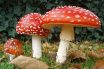
Dots
(Of stem) Small white or colored points over the apex, or sometimes covering the entire stem, pruina; if sticky then referred to as glandular dots, as in boletes and the genus Suillus in particular.
-
Discomycete
An ascomycete exposing the reproductive surface, the hymenium, on fruit bodies shaped like cups, discs, tongues, saddles, paddles, sponges, or brains.
-
Dextrinoid
(Of spores and tissues) Staining reddish-brown in Melzer’s reagent.
-
Dosa
One of the three humours, called vata, pitta and kapha. When balanced they are responsible for good health, but when imbalanced they act as ‘faults’ and can cause illness.
-
Dhatu agni
The digestive fire that exists in the tissue membranes and is responsible for digesting the unstable portion of the dhatu into the stable portion. It also separates the waste products, secondary tissue and unstable portion of the next tissue in the nutritive hierarchy (Chapter 2) from the stable portion.