Category: E
-
Ergonomics
The science concerned with people and their work; it explores mechanical principles enhancing efficiency and well being in the work environment. How the workplace, job practices, and equipment design interact to affect the well-being of the workers. The study of humans at work. A discipline relating human factors to the design and operation of machines…
-
Epidural
An anesthetic injected into the epidural space around the spine, often used in labor and delivery. External to the dura mater. On or above the outer coat of brain or spinal cord. On the outside of the dura mater. Outside the dura mater, the outermost membranous covering of the brain and spinal cord; also called…
-
Endoscopy
Examination of any cavity of the body with an endoscope. Inspection of the inside of a body cavity by means of a special instrument (endoscope), usually inserted through a natural body opening (e.g., the mouth, anus, urethra) but sometimes through an incision. Examination of internal body areas (larynx, esophagus, stomach, uterus, rectum, colon) with an…
-
Endarterectomy
The surgical excision of the innermost lining of an artery to remove blockage. The surgical removal of the lining of a blocked artery. Surgical excision of fatty deposits along with diseased endothelium and significant portions of the arterial lining. A surgical procedure to remove the buildup of fat and cholesterol in an artery and restore…
-
Empyema
Accumulation of pus in a hallow organ; abscess. The accumulation of pus in a body cavity, especially the chest. The collection of pus in a cavity, especially in the pleural cavity. Pus in the lung cavity or other body cavity, usually due to bacterial infection; treatment is by antibiotics and surgical drainage of the pus.…
-
Embolization
A treatment that blocks the flow of blood (i.e. to “starve” a tumor). Formation and release of a substance to occlude blood vessels in the treatment or prevention of hemorrhaging. Obstruction of a blood vessel by intentionally injected material or by physiologic migration of loosened intravascular plaque or thrombi. A method utilized to halt or…
-
Exocrine
Pertaining to glands that release their secretions into the digestive tract or to the outer surface of the body. Secreting into a duct: endocrine glands. Glands that secrete onto internal or external surfaces. A term applied to the external secretion of a gland. Opposite of endocrine. The endocrine system consists of a network of organs…
-
Exfoliative cytology
Microscopic examination of cells that have been shed from or scaled off the surface epithelium. Performed for diagnostic purposes.
-

Excoriation
Abrasion of the skin or of the surface of any organ by trauma, chemical agents, burns, or other causes. Irritation of the superficial layers of the skin. Scraping or wearing away of surface tissue. A raw skin surface or mucous membrane after rubbing or burning. Injury to the surface of the skin caused by scratching,…
-
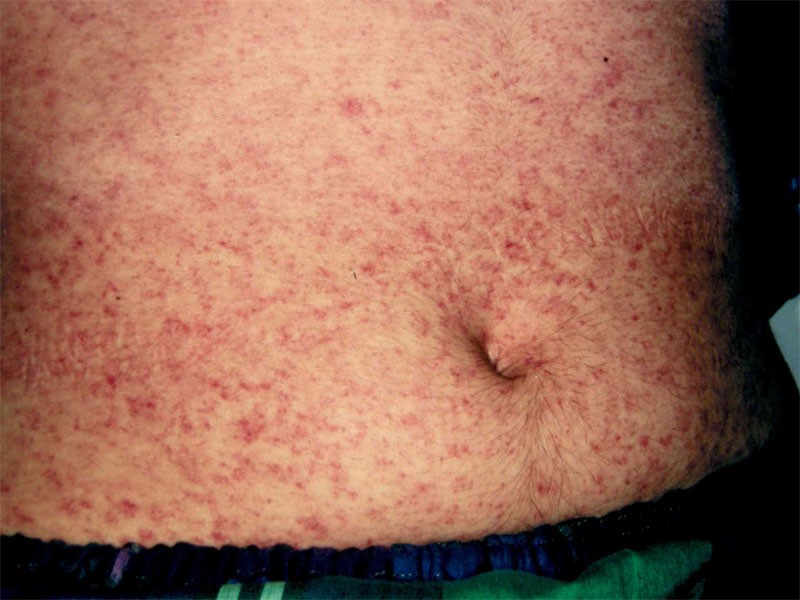
Exanthems
Any eruption or rash of the skin (not the mucous membrane). Term often used to describe childhood or infectious rashes. Any skin eruption with inflammation, as measles. A skin rash found with infectious diseases like measles or chickenpox. A skin rash accompanying any eruptive disease or fever. Rash caused by a systemic infection. Several childhood…