Category: H
-

Hodgepodge
Although we now use them metaphorically to refer to a confused mess of anything, the words hodgepodge, gallimaufry, and farrago all originated as names of jumbled mixtures of food. The oldest of these three is hodgepodge, a word that, in a slightly different form, dates back in English to the fourteenth century. At that time,…
-

Hockey
In rural England, the day in late autumn when the last of the crop is harvested and brought back home is called the harvest-home, a day of celebration and gaiety. The feast held on this day is called the hockey, a puzzling name because its origin is completely unknown and yet it has been commonly…
-
Hippogastronomy
The art of cutting, cooking, and eating horsemeat is called hippogastronomy, a word invented in the nineteenth century by combining the ancient Greek word for horse—hippos—with the word gastronomy. The Greek hippos is also represented in hippopotamus, a word that literally means river horse, and in hippodrome, the French name for the racetrack. The word…
-

Hiccup
The involuntary spasm of the glottis that occurs when you bolt down your food or eat something excessively spicy was not originally called a hiccup: it was called a yex, and if you suffered a series of them, you were yexing. The word yex, which first appeared in English around 1400, acquired a rival around…
-
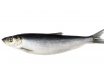
Herring
The North Atlantic fish known as the herring, long an important source of food in Britain, has had its current name for over thirteen hundred years. The name may have developed from the Old English word here, meaning army or multitude, in reference to the huge schools of herring that swim to the coast of…
-

Hare
Although they both have long ears and are prepared for the table in a similar manner, hares and rabbits are not considered by zoologists to be the same animal: hares are larger, for example, and do not live in burrows. Nonetheless, their overall resemblance has long caused people to confuse them, resulting in frequent misapplication…
-

Hamburger
The word hamburger dates back to 1834 where it appeared on a menu from Delmonico’s restaurant in New York. At that time, and even into the twentieth century, hamburgers were better known as hamburger steak, a kind of beefsteak ground in the style of butchers from Hamburg, a city in Germany. The name of this…
-
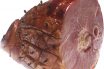
Ham
Back in the sixteenth century, when fawning courtiers complimented Queen Elizabeth for her hams, they were not praising her culinary skills, but rather her limber legs that allowed her to dance more featly and jump more lightly than any other woman in her court. One Renaissance painter even depicted the dancing Queen in the midst…
-
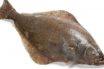
Halibut
The scientific name for the halibut is hippoglossus, Greek for horse tongue, so called because of its wide, flat shape. In contrast, its more common name, halibut, derives not from its shape but from when the fish was usually eaten—on Church holidays, or, as they were originally called, on holy days. The halibut, therefore, is…
-

Haggis
The Old French name for the magpie was agace, pronounced agg-ass and deriving from a much older word meaning pointed, as is the bird’s beak. As Rossini’s opera The Thieving Magpie attests, this noisy and quarrelsome bird is infamous for its larceny, filling its nest with stolen scraps of cloth and bits of shiny metal.…