Category: H
-
Haustorium (plural haustoria)
The sucker of a parasitic plant by which the parasite anchors itself into the host plant. Roots or suckers found in parasitic plants. A structure by which a parasitic plant anchors itself to and extracts nutrition from its host. In parasitic vascular plants, a specialized outgrowth from the stem or root that penetrates the living…
-
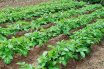
Haulm
The stem in beans, peas, potatoes and grasses [old-fashioned term].
-
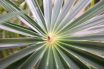
Hastula
A small flange of tissue found on the abaxial and/or adaxial face where the lamina joins the petiole in most palmate and costapalmate leaves (specialist term used in Palmae, 1986). A flange of tissue where a palmate or costapalmate leaf joins the petiole in Arecaceae.
-

Hastate
(Of a leaf-base) with two ± triangular lobes pointed outwards. More or less arrowhead-shaped, but with the basal lobes divergent. Shaped like a halberd. Shaped like a late medieval pike-head known as a ‘Halberd’, used to describe the base of a leaf.
-
Harmomegathy
Change of shape in response to change in hydration level.
-
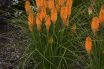
Hardy
Able to withstand unfavorable conditions or seasons, usually with reference to winter conditions. Capable of surviving unfavorable conditions, such as cold weather.
-
Hardwoods
Wood from non-coniferous trees (as opposed to coniferous tree wood, softwood). In the broad sense, denotes a non-coniferous tree, such as maple, beech, birch, oak, aspen, cherry, basswood, cottonwood, willow, alder, and so on.
-
Haptera (singular hapteron)
Adhesive-secreting disc-like holdfasts, root-like structures attaching the thallus of plants such as Podostemaceae to their rocky substrate.
-
Haplostemonous
With stamens equal in number to petals.
-
Haplopetalous
With petals in one series [unusual term].