Category: I
-
Idealization
A mental mechanism in which the person attributes exaggeratedly positive qualities to the self or others. A mental mechanism, operating consciously or unconsciously, in which one overestimates an admired aspect or attribute of another. A type of defense mechanism, in which a child (or adult) grossly exaggerates the positive qualities of someone or something.
-
ID
In Freudian theory, the part of the personality that is the unconscious source of unstructured desires and drives.
-
ICD-10
The 10th edition of the international classification of diseases.
-
Iatrogenic illness
A disorder precipitated, aggravated, or induced by the physician’s attitude, examination, comments, or treatment. An illness or injury resulting from a diagnostic procedure, therapy, or other element of health care. An iatrogenic illness is often confused with a “nosocomial” illness, which simply means an illness “occurring in a hospital.”
-
Isotonic
Muscle actions in which the muscle shortens and lengthens and movement occurs at the joint. Solutions with the same osmotic pressure; often refers to a solution with the same osmotic pressure as body fluids. Hypertonic and hypotonic refer to solutions that are more and less concentrated. A contraction in which a muscle shortens against a…
-
Isometric
Muscle actions that occur when tension is developed in the muscle without movement at the joint or a change in the muscle length. The tension remains constant because the length of the muscle does not change. Movement against an immovable force; static; a muscle contraction in which the tension increases, but muscle length remains the…
-
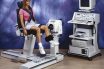
Isokinetic
A type of muscular action in which movement occurs at the joint, as in an isotonic action; however, the tension remains constant, as in an isometric action. Contraction in which the tension developed by the muscle while shortening at constant speed is maximal over the full range of motion. In exercise, the term isokinetic is…
-
Irregular bone
A bone with a complex shape, such as a vertebra.
-
Iron deficiency anemia
Anemia is a condition in which the body does not have enough healthy red blood cells, which provide oxygen to body tissues. Iron deficiency anemia is a decrease in the number of red cells in the blood caused by too little iron. Anemia resulting from a low hemoglobin level and a low hematocrit level. Symptoms…
-
Iron deficiency
Depleted iron stores, although not to the level of anemia. Inadequate intake of iron; characterized by anemia.