Category: L
-
Lymphoid organs
The organs where lymphocytes develop and congregate: bone marrow, thymus, lymph nodes, spleen, and other lymphoid tissues. The spleen, lymph nodes, thymus, Peyer’s patches, and tonsils, where more than 98% of T lymphocytes are found.
-
Lymphoranuloma venereum (LGV)
A sexually transmitted disease that affects the lymph nodes is a disease that is endemic in the southern United States. Caused by a filterable virus and is characterized by ulcerative lesions on the genitalia, spreading to the lymph channels and lymph nodes and becoming systemic is self-limiting. Tetracycline is used to treat the disease.
-
Lymphodema
Chronic edema of the extremities as a result of an accumulation of fluid because of an obstruction or severance of the lymph nodes.
-
Lymphatic tissues
A three-dimensional network of reticular fibers and cells, the meshes of which are occupied in varying degrees of density by lymphocytes; there are nodular, diffuse, and loose.
-
Lymphatic glands
Lymph nodes.
-
Lymphadenopathy syndrome
A generalized, persistent enlargement of the lymph nodes, sometimes accompanied with a mild fever and weight loss is associated with HIV infection is also known as generalized lymphadenopathy syndrome.
-
Lycanthropy
The delusion of being a wolf. A very rare symptom of mental disorder in which an individual believes that he can change into a wolf. A mania in which one believes oneself to be a wild beast, especially a wolf. The act of transforming from a human to an animal. Lycanthropy comes from the Greek…
-
Luteal phase
The last 14 days of the ovulatory cycle in which the corpus luteum is formed and the uterus is prepared to nourish a fertilized egg.
-
Luria-nebraska test
A battery of neuropsychological tests that can detect impairments of different parts of the brain.
-
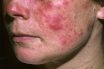
Lupus erythematosis
An autoimmune disease in which the body destroys its own tissues.