Category: M
-
Mosy
Before applesauce acquired its current name, it was known as moyse, moy, mose, and mosy. These words, all of which derived from the Old English word mos, meaning porridge, ceased to be used at the end of the sixteenth century.
-
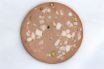
Mortadella
Now seasoned with parsley, the lightly smoked, Italian sausage known as mortadella was originally seasoned with myrtle, a Mediterranean shrub whose pungent leaves taste somewhat like rosemary. Myrtle, in fact, is the source of the sausage’s name, which derives from the Latin word for myrtle, myrtus (further back, the Latin myrtus derived from a Semitic…
-

Molasses
Throughout the eighteenth and nineteenth centuries, molasses was the most commonly used sweetener in North America because it was cheaper than sugar and was readily imported from the West Indies. Even in the early twentieth century, molasses remained popular until sugar prices dropped after World War I, about the same time that Boston suffered its…
-

Mocha
The strong Arabian coffee known as mocha, often used to flavour cakes and ice cream, takes its name from Mocha, the port on the Red Sea through which it was exported. Mocha was first referred to in English in the mid eighteenth century. The essence of coffee, often accompanied by the presence of chocolate, though…
-

Mint
Although mint—as in doublemint, spearmint, and peppermint—has become the most popular flavour of chewing gum, Alexander the Great forbade his soldiers to chew mint leaves because his mentor, Aristotle, believed that the herb sexually excited the young men and thus diminished their desire to fight. Aristotle’s notion may have had something to do with the…
-
Mincemeat
Apart from a bit of suet, there is about as much meat in mincemeat as there is in sweetmeat: none. Mincemeat (a mixture of fruits steeped in rum) and sweetmeats (sugared cakes and candies) acquired their apparently incongruous names in different ways. The word mincemeat, first used in English in the middle of the nineteenth…
-

Milk
In 1818, Abraham Lincoln’s mother died of “the slows,” a disease caused by contaminated milk; four years later, Louis Pasteur was born, a French chemist who invented pasteurization, a process that made milk much safer to drink. As a result of pasteurization, milk ceased, in the nineteenth century, to be treated with suspicion and instead…
-
Mezzaluna
This crescent-shaped chopping knife takes its name from the Italian mezza luna, meaning half-moon. The Italian mezza—or its masculine counterpart, mezzo—are more familiar as musical terms as in mezzo soprano (a voice halfway between a soprano and a contralto) and mezza orchestra (a musical composition requiring only half the orchestra). Luna derives from the same…
-
Mess
As a culinary term, the word mess persists only in biblical usage, as in the “mess of potage” for which Esau sold his birthright, and in military usage, as in mess hall. The word originally referred simply to a portion of food, enough to fill one’s belly, and derived ultimately from the Latin word mittere,…
-
Menu
From the Latin word minuere, meaning to lessen, a whole family of English words has developed: in addition to menu they include diminish, minute, minor, minus, mince, minuet, and even, through a misunderstanding, minnow. The Latin adjective minutus, meaning small, was formed from minuere, and it was this word that directly gave rise to minute—meaning…