Category: M
-
Mensa
In 1962, a group of smart people, tired of each other’s company, decided to form a club for people with IQs above 148 so that they could meet other smart people of whom they were not yet tired. Certain that the name Smart People’s Club would alienate the general public (whom they feared) they chose…
-
Melon
Alexandre Dumas, the nineteenth-century author of The Three Musketeers, so loved melons that he offered to give all his published manuscripts to the French municipality of Cavaillon in exchange for supplying him with twelve melons a year for the rest of his life. This love of the melon was perhaps shared by the Greeks, who…
-
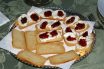
Melba toast
Not one, but two, dishes have been named after the turn-of-the-century opera diva, Dame Nellie Melba. The first dish to acquire her name, Melba toast, dates back to 1897 when Melba stopped in at the London’s Savoy Hotel and ordered several slices of toast which, by mistake, were served to her without butter; Melba so…
-
Meat
The essential difference between the words meat and flesh is that we eat the former and are the latter; in other words, although the two words denote more or less the same thing, we prefer to think of the pork chop on our plate as meat, not flesh, and we prefer to think of ourselves…
-
Mealie-mealie
At the beginning of the nineteenth century, Dutch settlers in what is now South Africa borrowed the Portuguese word milje—meaning millet, a kind of grain—and from it formed the word mielie, which they first bestowed upon the grain known in North America as corn and later bestowed upon a cake made from this corn. Eventually,…
-
Meal
The meal in three course meal and the meal in oatmeal have no linguistic connection to each other. Like the word meat, the meal that refers to breakfast, lunch, and dinner derives ultimately from an Indo-European source meaning measure. Because people have long eaten at appointed or “measured” times—such as noon—this ancient word for measure…
-
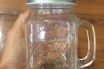
Mason jar
Used by millions to preserve fruit, vegetables, and even meat, Mason jars take their name from their inventor, John Mason, who patented the air-tight jar in 1858. Mason’s own surname likely came from one of his ancestors being a mason, that is, as a stonecutter. The term freemason arose in the fourteenth century to describe…
-
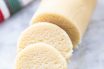
Marzipan
The almond-flavoured confection now known as marzipan was originally known in English as marchpane, a name that probably traces its origin back to an Arabic term meaning seated king. This Arabic term—mawthaban—was originally applied by the Arabs to an Italian coin depicting Christ sitting on a throne. The Italians themselves then borrowed this name, spelling…
-

Martini
The gin and vermouth cocktail known as the martini may simply take its name from Martini and Rossi, an Italian winery producing vermouth since 1829. However, other explanations for the cocktail’s name abound, including that it was invented in 1910 by Martini di Taggia di Arma, a bartender at the Knickerbocker Hotel in New York,…
-

Marshmallow (Althaea officinalis)
After a hard day of waging war with sword and battle axe, the ancient kings of England—Ethelred or Arthur, for example—no doubt comforted themselves with marshmallows. To them, however, marshmallows were not bite-size snacks of sugar and starch; rather, they were swamp plants whose sweet roots yielded a medicinal extract. For about eighteen centuries this…