Category: M
-
Mesotesta
Middle part of the outer integument of the seed.
-
Mesophytic
Vegetation adapted to normal conditions, avoiding both very wet and arid conditions.
-
Mesophyte
Plant adapted to living in normal conditions that are neither very wet nor very dry.
-
Mesophyll
The undifferentiated chlorophyllose parenchyma occurring below the epidermis usually of a leaf or stem; Leaf size class proposed by Raunkiaer (1934) and modified by Webb (1959): between 4501 and 18,225 mm2. Thin-walled parenchyma tissue containing chloroplasts that composes the bulk of the upper and lower epidermis.
-
Mesocotyl
Stem-like tissue connecting the seed and the base of the coleoptile.
-
Mesochil, mesochile
(In an orchid flower) the midportion of a lip that is divided into three distinct portions; mesochilium is a less common spelling.
-
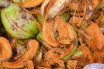
Mesocarp
The middle layer of a multi-layered fruit wall, often distinguished as such when fleshy or succulent. The middle layer of the fruit wall derived from the middle layer of the carpel wall. The middle layer of the fruit wall, often the fleshy edible portion. Central layer of the fruit wall between exocarp and endocarp.
-
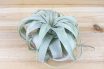
Mesic
With moderate growing conditions, without extremes of moisture or (in common usage) of temperature. Referring to a habitat that is well-drained but generally moist through most of the growing season.
-
Meristem
(Anatomical) undifferentiated tissue capable of division.
-
Meristele
Portion of the stele received by each leaf on a monostelic stem.