Category: N
-
Netrarukshamani
Palliative in the treatment of painful eye diseases.
-
Netraogahara, netrarogaghna
Indicated in the treatment of eye diseases.
-
Non-teratogenic
Referring to substance which will not cause malformations of an embryo or fetus.
-
Nodal rhythm
A type of heart rhythm disorder; the cardiac rhythm that results when the heart is controlled by the atrioventricular node in which the impulse arises in the atrioventricular node, ascends to the atria, and descends to the ventricles more or less simultaneously. Cardiac rhythm with origin at the atrioventricular node.
-
Nits
The eggs or youngs of a parasitic insect, such as a lice. The egg of a louse. The eggs of head lice are firmly cemented to the hair, usually at the back of the head; those of body lice are fixed to the clothing. Nits, 0.8 x 0.3 mm, are visible as light white specks.…
-
Neurotoxicity
The quality of exerting a destructive or poisonous effect on nerves. Capability of harming nerve cells or tissues.
-
Neurotoxic
Toxic to the nerves or nervous tissue. Poisonous to the nervous system. Harmful or poisonous to nerve cells. Poisonous or harmful to nerves and nerve cells.
-
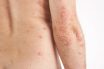
Neurodermatitis
A general term for a dermatosis presumed to be caused by itching due to emotional causes. A chronic psychophysiological disorder characterized by patches of skin becoming inflamed. Inflammation of the skin caused by psychological factors. Skin disease in which localized areas, especially the forearm, back of the neck, or outer part of the ankle, itch…
-
Nephrotoxic
An agent that is toxic to the kidneys. Poisonous or damaging to kidney cells. This term signifies being toxic (poisonous) to cells within the kidneys, leading to harm or the obliteration of these cells.
-
Nephroprotective
An agent that protects or prevents damage to the kidney cells.