Category: S
-
Salometer
A floating instrument used to test the strength or salinity of a salt or brine solution.
-
Salmonella
Intestinal pathogenic bacteria that can exist at low temperature. The Salmonella bacterium that causes salmonellosis food poisoning has nothing to do with salmon; rather, it took its name in 1900 from the man who identified it, Dr. Daniel Elmer Salmon. Dr. Salmon’s own name also has nothing to do with salmon; it is simply a…
-
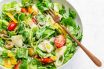
Salad
A cold dish served with dressing. The term “salad,” which finds its roots in Latin as “sal,” meaning salt, holds significance across numerous European languages. Originally, a salad denoted something immersed or dressed in salt. While the most commonly encountered salad consists of uncooked leafy greens, the realm of possibilities expands infinitely, encompassing an array…
-

Sake
Rice wine. Rice wine is a type of alcoholic beverage made from fermented rice. It is commonly used in Asian cuisine, both as an ingredient in sauces and marinades, and as a beverage. The Japanese word for rice wine is sake, which is often spelled as saki in English. Emerging from the rich traditions of…
-

Saffron
Dried stigmas of the saffron flower (Croccus). Used to color and flavor foods. Used in dishes such as paella and bouillabaisse, saffron is a spice made from the dried stigmas of the saffron crocus. Since the stigma is but a tiny part of the flower, about 4000 of them are needed to make one ounce…
-
Safety button
(Also known as “Flip Panel.”) Circular portion of cap panel which changes from convex to concave when container has vacuum.
-
Saccharin
A non-nutritive sweetener 300-plus times as sweet as sucrose (discovered in 1879). A white crystalline substance, used in place of sugar because, although it is nearly 500 times sweeter than sugar, it contains no carbohydrates. An artificial sweetening compound 300 times as sweet as sugar and extensively used by diabetics. An artificial sweetener used to…
-
Synbiotics
Combination nutritional supplements composed of probiotics and prebiotics.
-
Sweeteners
Four groups of compounds are used to sweeten foods: (1) the sugars, of which the commonest is sucrose (2) bulk sweeteners, including sugar alcohols (3) synthetic non¬ nutritive sweeteners (intense sweeteners), which are many times sweeter than sucrose (4) various other chemicals such as glycerol and glycine (70% as sweet as sucrose), and certain peptides.…
-
Superoxide dismutases
Enzymes which remove potentially harmful (pro-oxidant) superoxide from the body; they require zinc and copper, or manganese, for their enzymatic activity, and their assay can, for instance, be used to measure copper status. An enzyme that destroys superoxide. One form of the enzyme contains manganese, and another contains copper and zinc.