Category: S
-
Submaximal exercise heart rate
Heart rate taken during steady-state submaximal exercise.
-
Subcutaneous fat
Body fat found just beneath the skin. Fat deposited in the adipose tissue immediately under the skin’s surface constitutes approximately 80% of the body’s stored fat. The fat cell layer just beneath the skin. A segment of adipose tissue, situated in close proximity to the dermis, and responsible for the storage of energy in the…
-
Stroke volume
The amount of blood pumped by a ventricle in one heartbeat. The volume of blood ejected by each ventricle of the heart during a single systole. Amount of blood ejected from the ventricles with each beat of the heart. The amount of blood pumped by the heart with each beat. The amount of blood pumped…
-
Stroke
An obstruction of an artery in the brain. Gross cerebral hemorrhage or softening of the brain following hemorrhage, thrombosis, or embolism of the cerebral arteries. Symptoms may include coma, paralysis (particularly on one side of the body), convulsions, aphasia, and other neurological signs determined by the location of the lesion. Also known as cerebrovascular accident…
-
Stretch reflex
A muscle contraction in response to stretching within the muscle that provides automatic regulation of skeletal muscle length. Protects a muscle from being overstretched and damaged by limiting its range of movement. The reflex contraction of a muscle in response to a sudden stretch of the muscle beyond its normal length. Serves to protect the…
-
Stress fracture
A fracture (often incomplete) of the bone resulting from repeated low-level stress for a long period of time; also called a fatigue fracture. Fracture caused by stress, overuse or pathological weakness of the bone in the foot or leg. A fine hairline break in bone that occurs with out acute trauma, is clinically symptomatic, and…
-
Streamlined flow
Continuous, steady movement of a fluid.
-
Steady state
An exercise state in which the body is able to supply the oxygen needed for exercise and oxygen supply meets oxygen demand. After the first 3-4 minutes of exercise, oxygen uptake has reached an adequate level to meet the oxygen demand of the tissue; heart rate, cardiac output and pulmonary ventilation have attained fairly constant…
-

Static stretching
Stretching to the point of pain, backing off slightly, and holding the elongated position. Elicits the inverse stretch reflex arc and facilitates muscle relaxation. Held, nonbounce muscle contraction in which muscle tension is sustained throughout the stretch. A form of stretching in which the muscle to be stretched is slowly put into a position of…
-
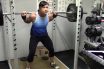
Static contraction
Contraction in which opposing muscles contract against each other and prevent movement. Muscle develops tension without changing length. A muscle contraction that produces an increase in muscle tension but does not cause meaningful limb displacement or joint displacement and therefore, does not result in movement of the skeleton. Isometric contraction.