Category: S
-
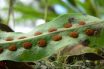
Spore
A cell capable of developing into a gametophyte; analogous to a phanerogam seed. The resting stage in the growth cycle of certain bacteria (rod shaped) which are resistant to heat and chemicals. In the case of yeast and molds, spores are considered reproductive bodies since many spores are produced by one organism. The reproducing grains…
-
Sporangium (plural sporangia)
(In pteridophytes) a sac or capsule containing spores. A spore case in which asexual spores are produced. A receptacle in which spores are formed in lycopods and ferns.
-
Sporangiophore
The part of the fertile leaf carrying the sporangium; (In Equisetum) peltate organ bearing sporangia. A modified part of a fertile leaf or a peltate organ (in Equisetaceae) that bears the sporangia. In microbiology, the supporting stalk for a spore sac of certain fungi.
-
Spongiose
Spongy, soft.
-
Splitting
(In taxonomy) taking the narrow view and describing many taxa as separate entities. OPPOSITE: lumping. (The respective botanists are called splitters and lumpers). A mental mechanism in which the self or others are viewed as all good or all bad, with failure to integrate the positive and negative qualities of the self and others into…
-
Split
Divided nearly to the base. To divide something, or become divided. A type of leavened confectionery that is sweet to the taste, shaped like a biscuit and sliced open like a shortcake. It is commonly paired with fresh fruit, butter or clotted cream.
-
Spirolobal
(Of cotyledons) closely parallel and folded once, with the radicle lying against the surface.
-
Spiricle
Minute coiled threads in some seed coats that uncoil when moistened.
-
Spirally arranged
(Of organ arrangement) in a spiral or ascending coil along an axis; for example, leaves on a stem with one (alternate) leaf per node.
-
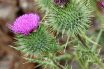
Spiny
Armed with spines.