Category: S
-
Spathella
(In Podostemaceae) a closed membranous sac enveloping the immature flower; Lemma or sometimes glume [old-fashioned usage, not recommended].
-
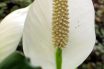
Spathe
A large sheathing bract, usually either the prophyll or a peduncular bract, surrounding the inflorescence or spadix. A large, usually solitary bract subtending and often enclosing an inflorescence; the term is used only in the monocotyledons. A large bract ensheathing an inflorescence or its peduncle. Large, often colored or leafy bract surrounding the spadix in…
-
Spathaceous
Resembling, or with the function of, a pathe (e.g. large bract(s) enclosing the flower(s)).
-
Span
(Old measurement) about 22.9 cm or 9 inches [old-fashioned term]. The distance from one fixed point to another, as the distance, when the hand is fully expanded, from the tip of the thumb to the tip of the little finger.
-
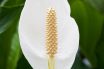
Spadix
Unbranched inflorescence with fleshy or thickened axis in which the flowers are (partly) sunken (as in Araceae). The thick or fleshy flower spike of certain plants, usually surrounded by or subtended by a bract, as in the Araceae. Fleshy flower spike bearing many tiny florets; the type of flower spike found in members of the…
-
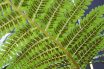
Sorus (plural sori)
(Of pteridophytes) structure bearing or containing groups of sporangia. A cluster of spore-bearing sacs (sporangia) on the underside of a fern leaf.
-
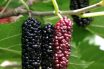
Sorosis
Fleshy multiple fruit arising from the ovaries of many different flowers (as in mulberry, breadfruit or pineapple).
-
Sorophore
(In pteridophytes) specialised sporangiabearing organs on leaf margins [obscure term].
-
Somatic (chromosome number)
(2n) with twice the haploid number.
-
Solitary
(Usually of stems) single, not in clusters; Alone. Unassociated with its kind. Not grouped into an inflorescence but appearing singly in leaf axils, ends of branches, or on a flowering stem.