Category: T
-
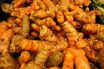
Turmeric root
An underground rhizome from a perennial plant native to southern India and Asia. Comes in a red and yellow form, but only the yellow is eaten. One of the most important herbs for both internal and external use, it is also essential in most Indian cooking.
-
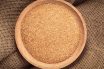
Turbinado
A granulated sugar made from pure sugarcane.
-
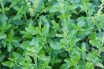
Tulsi
Indian holy basil. The sacred plant of Krishna, this herb is said to open the heart and mind, bestowing the energy of love and devotion.
-
Triphala
An important Ayurvedic compound consisting of three herbs: amalaki, bibhitaki, and haritaki. It is the best laxative and bowel tonic and a balanced rasayana that is good for vata, pitta, and kapha.
-
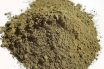
Trikatu
An Ayurvedic compound of ginger, black pepper, and pippali (piper longum) that burns ama, detoxifies the body, and improves digestion, absorption, and assimilation.
-
Tridosha
The three organizations or codes of intelligence within the body, mind, and consciousness; the three bodily humors: air (vata), fire/bile (pitta), and water (kapha). The amalgamation of three fundamental principles of energy, also known as biological humors, that constitute life according to Ayurvedic philosophy.
-
Tikta Ghrita
“Bitter ghee,” a specific Ayurvedic compound made of clarified butter with various bitter herbs; used for medicinal purposes.
-
Topical irritant
A substance that irritates the skill.
-
Tissue salt
Inorganic compound essential to the growth and function of the body’s cells.
-
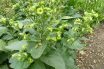
Wild tobacco (Nicotiana rustica)
Originally grown and smoked by North American Indians. Now the chief source of nicotine sulphate, an important insecticide for the control of aphids, thrips, whiteflies and mites.