Category: T
-

Turducken
If ever there were evidence as to why the world needs more poets, it can be found in one word: turducken. No poet, nor anyone sensitive to language, would allow anything edible to be given such a name. It’s bad enough that the word in its entirety sounds hideous; it’s worse that its first syllable…
-
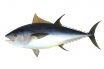
Tuna
As the name of a large fish (sometimes weighing over a thousand pounds), the word tuna did not appear in English until just over one hundred years ago when it appeared as a variant of the fish’s older English name, tunny. Dating back to the early sixteenth century, tunny derived from the French than, which…
-
Trollibags
Most people consider the guts of an animal to be its least palatable component, but you would never guess this from the apparent delight that English speakers have taken in inventing or borrowing names for these edible parts of an animal’s digestive system. These names include tharm, guts, bowels, and entrails; inmeat, innards, intestines, and…
-
Treen
A thousand years ago, the typical English table setting consisted of a wooden bowl, a wooden plate, a wooden mug, and a wooden spoon; these utensils were made of wood not because it is an excellent source of fibre, but because other materials—such as glass, earthenware, and pewter—were either not invented yet or were too…
-
Treacle
What North Americans call molasses, the British call treacle, a word that derives ultimately from a Greek word meaning fierce or poisonous beast. This Greek word—therion—gave rise to an adjective, theriakos, a form of which was used by the ancient Greeks in the phrase antidotos theriake, meaning antidote for poisonous beasts. From this phrase, the…
-
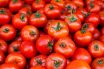
Tomato
Although it is hard to imagine Italian cuisine without the tomato, that juicy red fruit was not introduced to Italy until the sixteenth century; the tomato is, after all, a “New World” fruit, native to Peru and Central America where the Aztecs called it tomatl. When they returned to Europe with the fruit, Spanish explorers…
-
Tomacco
In an episode from the 1999 season of The Simpsons, Homer hits paydirt when he crosses a tomato with tobacco to invent the tomacco, a terrible-tasting but highly addictive new vegetable. In 2003, Rob Baur, a Simpsons fan and operations analyst in an Oregon waste-water facility, realized that tomatoes and tobacco both belong to the…
-
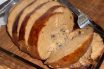
Tofurkey
A portmanteau word is one that’s created by combining two other words, and the realm of food seems particularily conducive to their formation. Some, such as brunch, which was formed from breakfast and lunch, have existed since the nineteenth century, and thus seem as familiar as an old shoe. Others have been around for decades,…
-

Tiramisu
The name of this dessert comes from the Italian phrase lira mi su, literally meaning pick me up, probably because the coffee-soaked sponge cake provides a slight caffeine boost. Tiramisu began to appear in English in the early 1980s. Much earlier, in the mid nineteenth century, pick-me-up itself emerged as a name for a stimulating…
-
Tidbit
Since the mid seventeenth century, scrumptious morsels of food have been called tidbits, a compound that derives from two words, one of them having an obvious origin, the other one not. The obvious one—bit—simply derives from the same source as the word bite: a bit is literally a piece bitten off (although the computer bit,…