Category: T
-
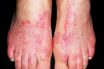
Tinea pedis
Dermatological pruritic lesion in the feet, caused by Trichophyton rubrum, T. mentagrophytes, or Epidermophyton floccosum. Athlete’s foot, Tinea corporis. Medical term for fungal infections of the feet; red, itchy rash of the skin on the bottom of the feet and/or in between the toes, usually found between the fourth and fifth toe. Fungal infection of…
-
Thyroid
A gland located near the windpipe (trachea) that produces thyroid hormone, which helps regulate growth and metabolism. The thyroid gland. An endocrine gland in the neck, which is activated by the pituitary gland and secretes a hormone which regulates the body’s metabolism. A gland located beneath the voice box (larynx) that produces thyroid hormone. The…
-
Thymus
An organ that is part of the lymphatic system, in which T lymphocytes grow and multiply. The thymus is in the chest behind the breastbone. A gland that enables cells of the immune system of mammals to mature. In humans, it lies behind the breast bone and extends upwards as far as the thyroid gland.…
-
Thrombomodulin
A cell surface glycoprotein of endothelial cells that binds thrombin and serves as a cofactor in the activation of protein C and its regulation of blood coagulation. A cell surface protein found on endothelial cells that plays a key role in modulating the final step in the coagulation process. After thrombin binds to thrombomodulin, thrombin…
-
Thrombocytes
Blood cells that help prevent bleeding by causing blood clots to form. Also called platelets. The platelets of the blood. Essential for normal blood clotting. Alternate name for platelets, a type of blood cell important in clotting.
-
Thrombin
An enzyme formed from prothrombin that converts fibrinogen to fibrin. (Dorland, 27th ed) EC 3.4.21.5. Plasma protein involved in the coagulation of blood. The key to thrombus (blood clot) formation. Thrombin is a proteolytic enzyme that cleaves fibrinogen into (molecular) pieces, which then spontaneously assemble themselves into fibrin, which forms a clot. A substance which…
-
Threonine
An essential amino acid occurring naturally in the L-form, which is the active form. It is found in eggs, milk, gelatin, and other proteins. A crystalline, a-amino acid considered essential for normal growth of animals. It is biosynthesized (i.e., made) from aspartic acid and is a precursor of isoleucine in microorganisms. An essential four-carbon amino…
-
Thermal
Pertaining to or characterized by heat.
-
Therapeutics
The branch of medicine which is concerned with the treatment of diseases, palliative or curative. Having a beneficial or curative effect. Pertaining to treatment or healing. The science concerned with medicinal substances that have curative potentials, pharmacognosy; materia medica; toxicology. The study of various types of treatment and their effect on patients. That branch of…
-
Testosterone
A hormone that promotes the development and maintenance of male sex characteristics. An androgen (steroid hormone) that is biochemically synthesized (made) from androstenedione, which is itself synthesized from progesterone. Testosterone is responsible for the development of male secondary sex characteristics in humans such as greater strength, larger body size, facial hair and a deeper voice,…