Category: V
-
Vittles
Although vittles might seem to be a word only a hillbilly would use, it is actually more authentic than its highbrow variant, victuals. These two synonyms for food derive from the Late Latin victualia, meaning nourishment, which in turn developed from a Latin root that meant life. The Late Latin victualia entered Old French as…
-
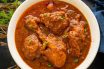
Vindaloo
Portuguese is the source not only of tempura, the name of a Japanese seafood dish, but also of vindaloo, the name of a hot curry dish originating in India. This Indian dish—made of meat in a sauce of wine and garlic—is called in Portuguese vin d’alho, deriving from vinho, meaning wine, and alho, meaning garlic.…
-
Vermouth
Vermouth takes its name from one of the bitter herbs formerly used to flavour it, an herb known in Old German as wermuota. This German name was adopted by French as vermout, which in turn was borrowed by English as vermouth in the early nineteenth century. Further back in history, the Old German wermuota—and also…
-
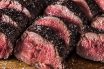
Venison
Although venison, venom, and Venus may not seem to have much in common, they derive from the same Indo-European source, a word pronounced something like wen and meaning to desire. This Indo-European source developed into a cluster of Latin words, all beginning with ven and all somehow maintaining their ancestor’s sense of desire. Venari, for…
-

Vanilla
One of the best kept secrets of ice-cream producers is that their most popular flavour, vanilla, derives its name from the Latin word vagina. For the ancient Romans, the word vagina meant sheath or scabbard, the protective casing from which a sword was drawn when danger threatened. This Latin vagina was adopted into Spanish as…
-
Viral transactivating protein
The specific protein used by a lytic virus to switch on the cascade of gene regulation by which that virus “takes over” a healthy cell and subverts its molecular processes (machinery) to produce virus components. This (transactivating) protein is key to the whole lytic cycle of the virus and therefore a potential target for therapeutic…
-
Vesicular transport (of a protein)
One of three means for a protein molecule to pass between compartments within eucaryotic cells. The compartment “wall” (membrane) possesses a “sensor” (receptor) that detects the presence of correct protein (e.g., after that protein has been synthesized in the cell’s ribosomes), then bulges outward along with that protein molecule. The membrane bulge-containing protein then “breaks…
-
Value-enhanced grains
Those grains that possess novel traits that are economically valuable (e.g., higher-than-normal protein content, higher-than-normal oil content, etc.). For example, high-oil corn possesses a kernel oil content of 5.8% of greater, versus oil content of 3.5% or less for traditional No. 2 yellow corn. High-amylose com possesses a kernel amylose (starch) content of 50% or…
-
Valine (val)
An amino acid considered essential for normal growth of animals. It is biosynthesized (made) from pyruvic acid. Valine is a branched-chain, essential amino acid. It is needed for synthesis of proteins and can be used for energy production within the muscle cell as well. Metabolism of valine in the muscle results in the eventual production of…
-
Vaginosis
The process whereby a cell internalizes an entity (such as a virus or a protein) that has bound to the cell’s outer membrane. Once that “bound entity” is inside the cell, the cell membrane fuses together again. A vaginal infection characterized by a smelly discharge and the presence of Gardnerella, Mycoplasma, and other anaerobic bacteria,…