Category: V
-
Vascular pain
A type of deep pain that develops when blood flow to a tissue, organ, or nerves is interrupted. Pain that throbs or pulses, such as the pain of a migraine headache.
-
Vascular endothelial growth factor (VEGF)
Peptide factor, existing in four forms with different lengths (i.e., 121, 165, 189, and 206 amino acids), that is mitogenic for vascular endothelial cells and promotes tissue vascularization. Its levels are elevated in hypoxia, and it is important in tumor angiogenesis. A polypeptide chemical produced by cells that stimulates the growth of new blood vessels.…
-
VAS (abbrev)
Visual analog scale.
-
Varicella zoster (shingles, herpes zoster)
Caused by the herpetovirus (varicella zoster virus); a painful papular or vesicular eruption is seen usually unilaterally on the skin or oral mucosa following the path of the involved sensory nerve. The patient exhibits fever and malaise. Varicella zoster is the virus that causes chicken pox. It is a mild but highly contagious disease that…
-
Variance
Degree of dispersion of data about the mean. The square root of the variance is the standard deviation. For bell‐shaped curves, the larger the variance, the flatter the distribution curve; the smaller the variance, the more peaked the curve. A measure of variation equal to the square of the standard deviation or its estimate. A…
-
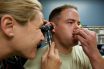
Valsalva maneuver
Performed by attempting to forcibly exhale while keeping the mouth and nose closed. It is an assessment tool, used during surgery, to evaluate the loss of integrity of the Schneiderian membrane. Closing the glottis and bearing down to create pressure in the chest, resulting in a drop in blood pressure and diminished blood flow to…
-
Viral g. t
Method of gene therapy that uses viruses as gene delivery vectors; viruses have a portion of their genome replaced by a therapeutic gene. The most widely used viruses are adenovirus, adenoassociated virus, lentivirus, and retrovirus.