Mindblown: a blog about philosophy.
-
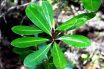
Wedge-shaped
Of a leaf-base, gradually tapering into the leafstalk.
-
Waste ground
Unused or uncultivated, often disturbed ground (as alongside a new road, around an industrial area, on a heap of mine waste or in a quarry, including w hat are known as brownfield sites).
-
Stem-leaves
Leaves arising from a plant’s stem (as distinct from basal leaves).
-
Spoon-shaped leaf
A leaf with a long narrow stalk-like lower part, suddenly widening into an oval, blunt tip (resembling a spoon or paddle).
-
Scrub
An area of vegetation dominated by shrubs on any type of soil. To prepare to carry out or assist in a surgical operation. The term “scrub” is taken from the routine of thorough hand washing (scrubbing) prior to putting on sterile rubber gloves and operating garments.
-
Salt-marsh
A marsh where the water is salty, usually from sea water flooding or seeping into it at high tide, but also (though rarely) beside salt springs inland.
-
Regular flower
One which is radially symmetrical, where± any straight line drawn through the centre produces two mirror images.
-
Ray-florets or ligulate-florets
The (usually) strap-shaped spreading florets found in some of the Daisy family, occurring either around the edge of the flower-head (as in a Daisy) or forming the whole of the flower-head (as in a Dandelion).
-
Pinnatisect leaf
A leaf± deeply cut into pinnately-arranged lobes, cut almost to its midrib.
-
Pinnatifid leaf
A leaf± deeply cut into pinnately-arranged lobes, but not cut right to its midrib, the lobes remaining connected by at least a narrow flange of leaf-blade bordering the midrib.
Got any book recommendations?